10/19/2020
3 Type of Inspection Quality Defects: How to Identify?
Learn about the 3 types of quality defects in manufacturing and how to identify them. To ensure product quality, product inspection is recommended.

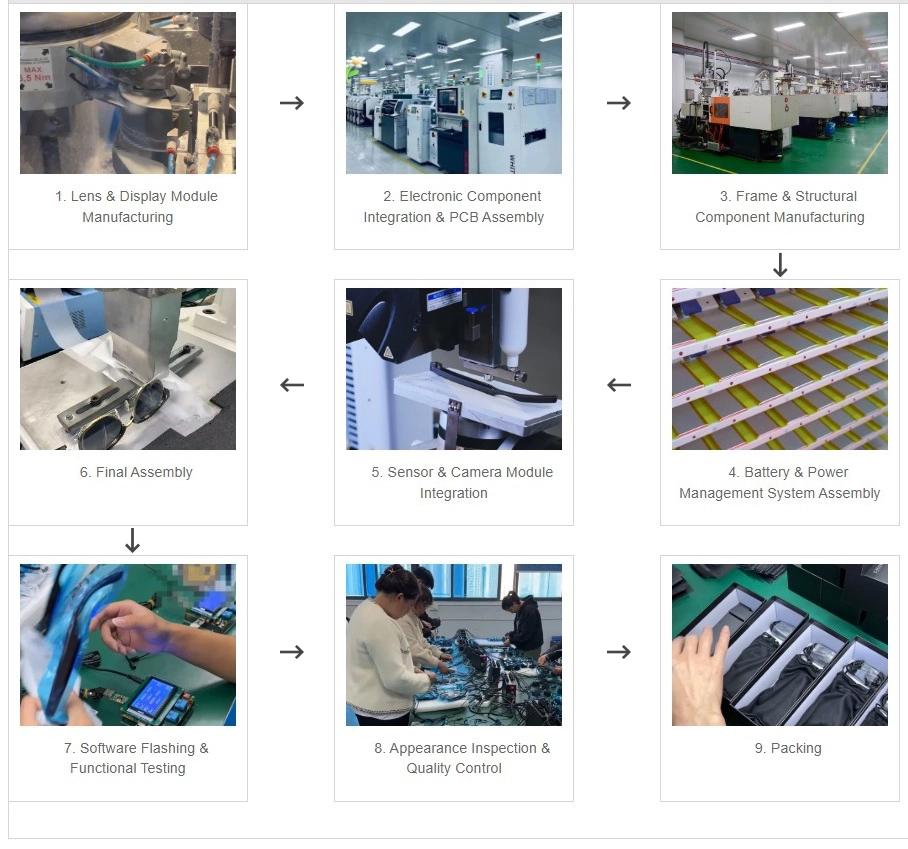
Process 1. Lens & Display Module Manufacturing
Key Processes:
The core of smart glasses lies in their display technology. This includes the manufacturing of microdisplays (such as LCoS, OLED, MicroLED), the precision grinding and coating of optical lenses, and the integration of display modules with lenses.
Main Equipment:
Precision Optical Grinding Machines, Vacuum Coating Equipment, Micro-Display Production Lines, Optical Inspection Equipment, Cleanroom Environments.
Major Problems:
Chipping, poor display.
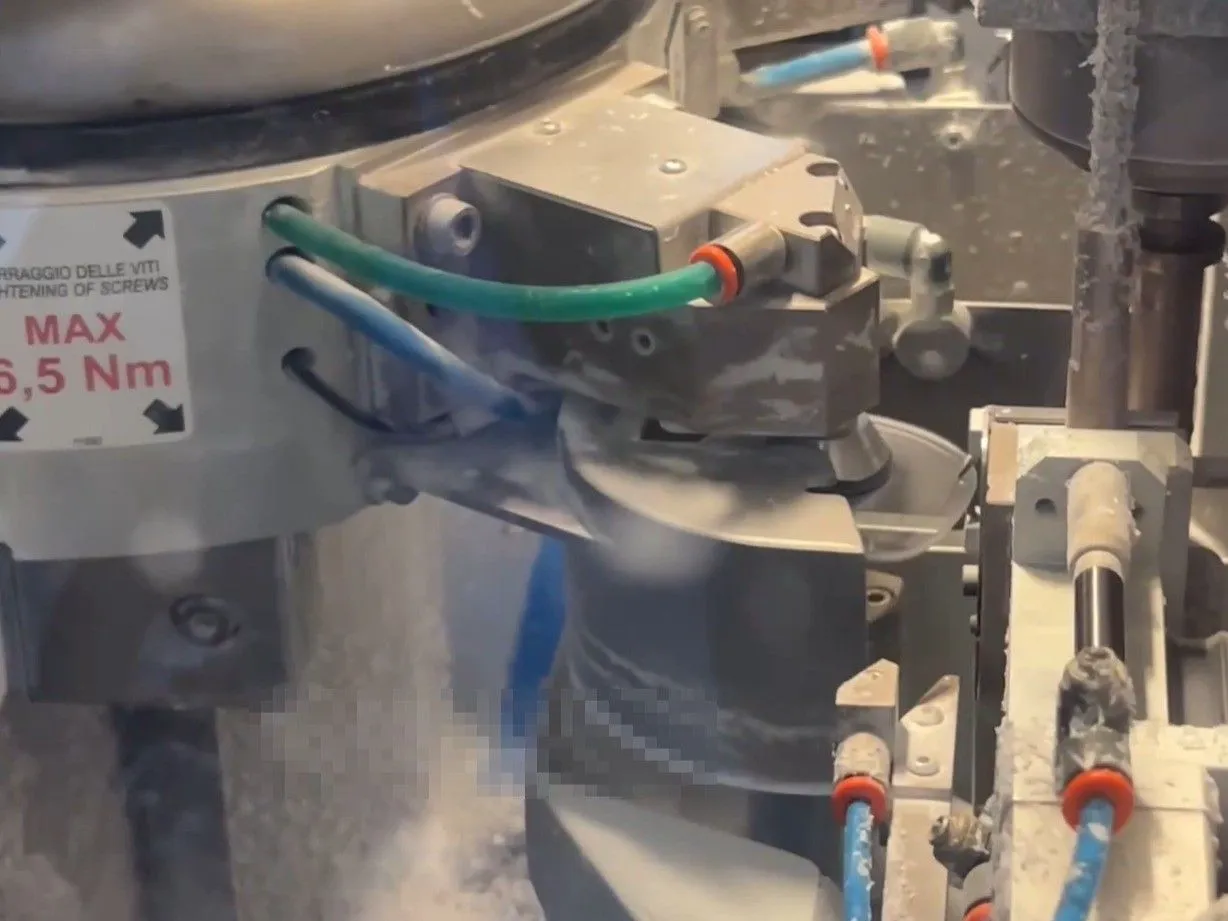
Process 2. Electronic Component Integration & PCB Assembly
Key Processes:
Microelectronic components such as processors, sensors, memory, and communication modules (Wi-Fi, Bluetooth) are assembled onto flexible or rigid printed circuit boards (PCBs) using surface mount technology (SMT).
Main Equipment:
SMT Placement Machine, Reflow Oven, AOI (Automated Optical Inspection) Equipment, X-Ray Inspection Equipment, Functional Tester.
Major Problems:
Weak welding, poor welding.
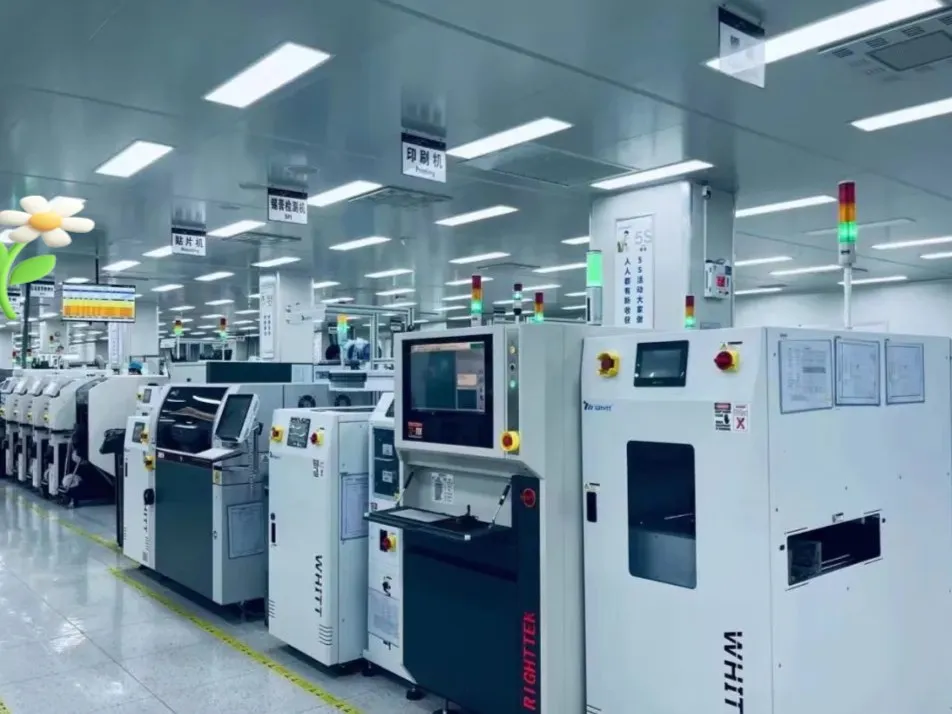
Process 3. Frame & Structural Component Manufacturing
Key Processes:
The frames of smart glasses are typically made of lightweight, high-strength materials such as titanium alloy, TR90, carbon fiber, or engineering plastics. The manufacturing process includes injection molding, CNC machining, surface treatment (spraying, electroplating), and polishing.
Main Equipment:
Injection Molding Machines, CNC Machining Centers, Laser Cutting Machines, Surface Treatment Equipment, Polishing Machines.
Major Problems:
The paint spraying is abnormal, with obvious nozzle marks.
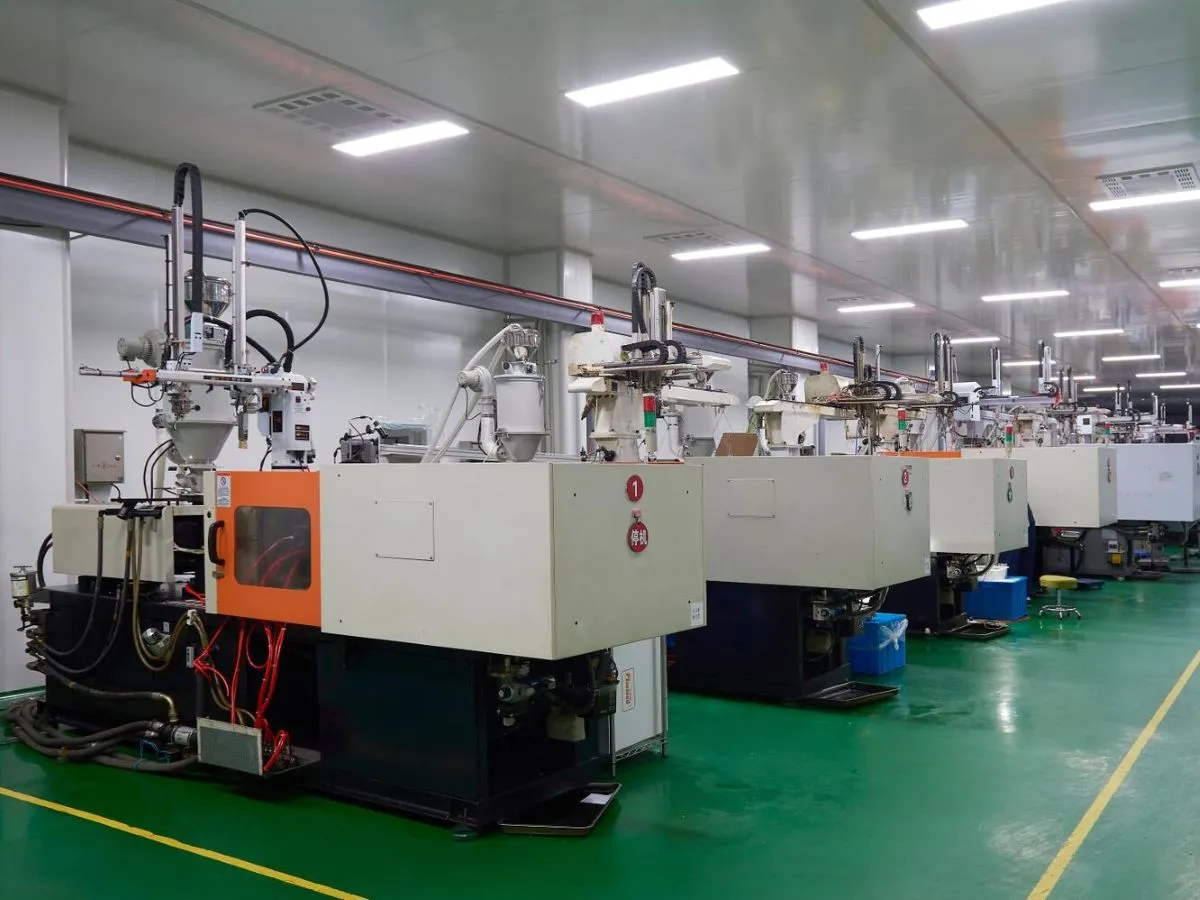
Process 4. Battery & Power Management System Assembly
Key Processes:
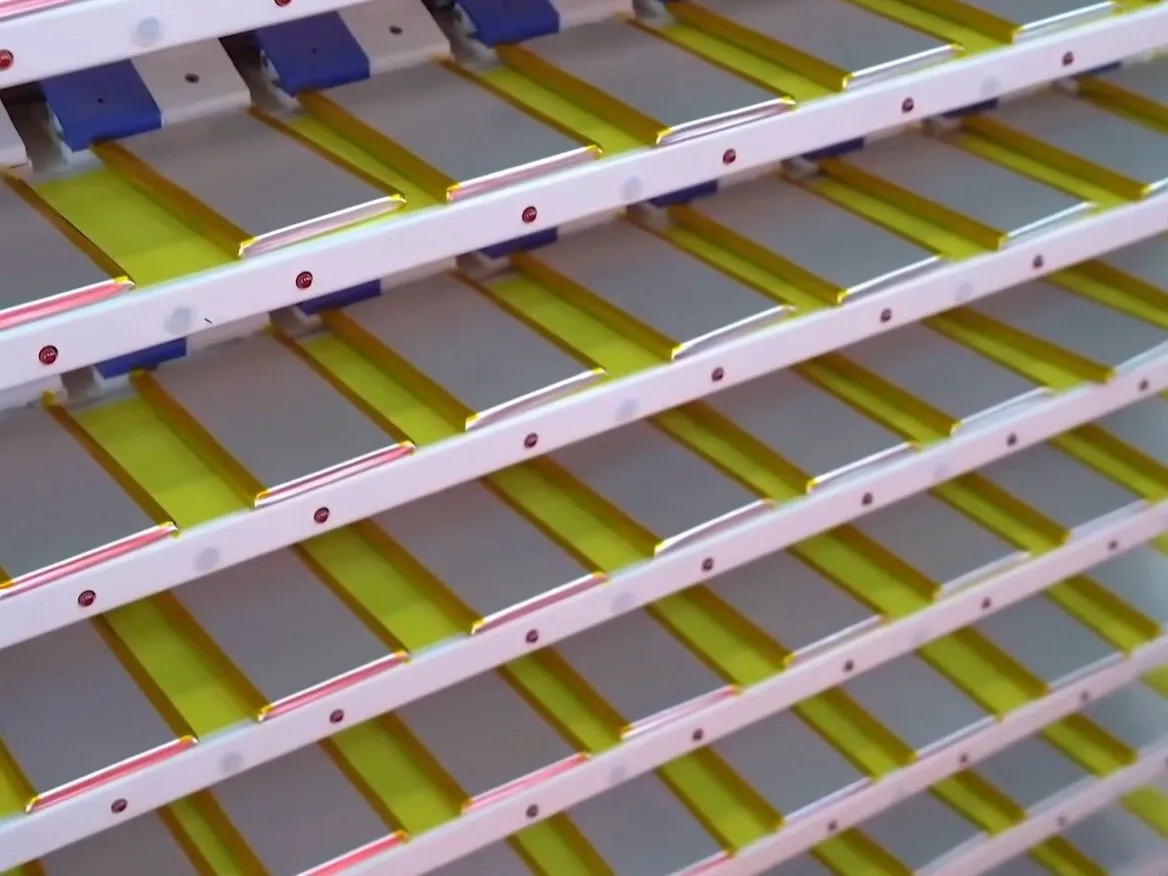
Integrate micro lithium-polymer batteries with power management modules to ensure safe and efficient power supply for smart glasses.
Main Equipment:
Battery Spot Welding Machine, Battery Testing Equipment, Power Management Module Assembly Line.
Major Problems:
Battery bulging, leakage, insufficient battery capacity.
Process 5. Sensor & Camera Module Integration
Key Processes:
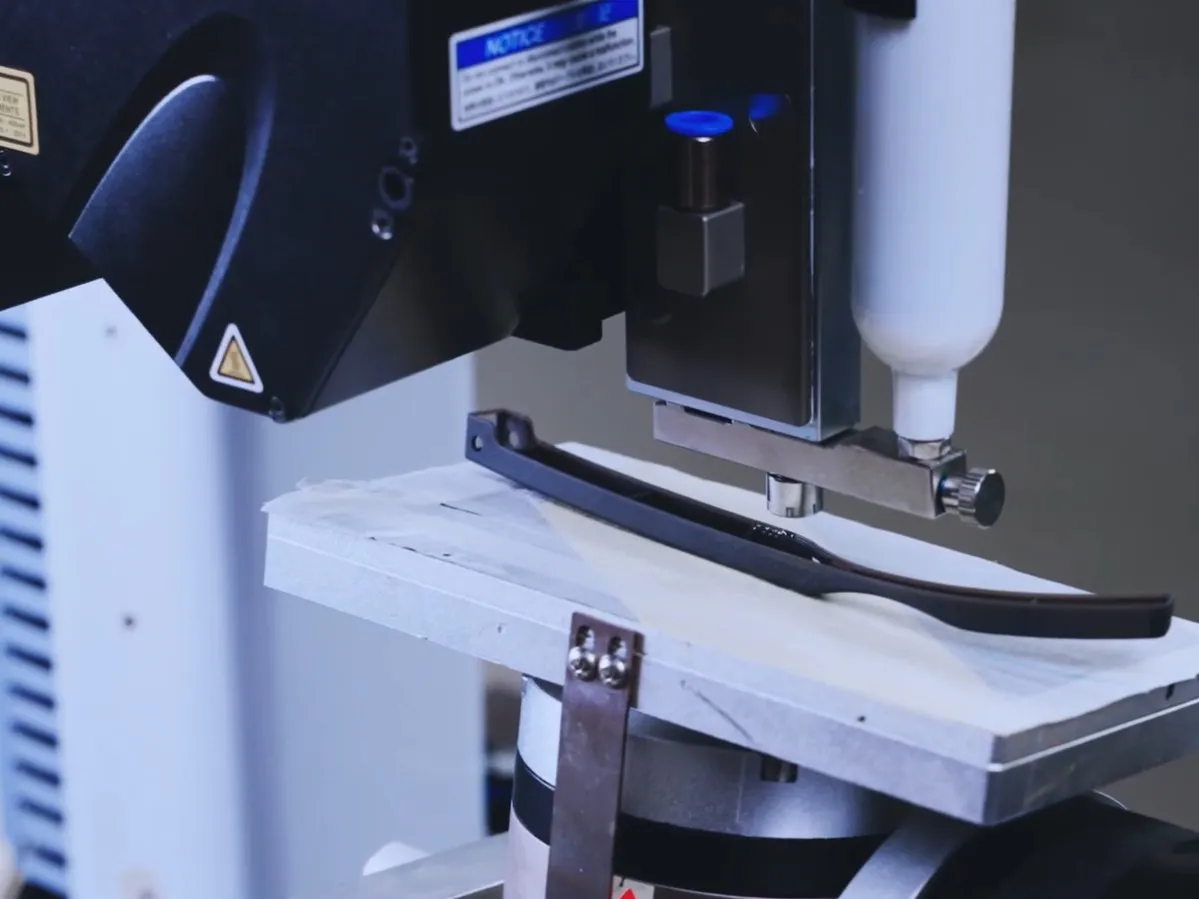
Various sensors (such as accelerometers, gyroscopes, magnetometers, and ambient light sensors) and miniature camera modules are precisely installed in designated locations and calibrated.
Main Equipment:
Precision Dispensing Machine, Automated Assembly Robot, Sensor Calibration Platform, Camera Module Testing Equipment.
Major Problems:
Incorrect assembly position, insufficient glue, or too little glue.
Process 6. Final Assembly
Key Processes:
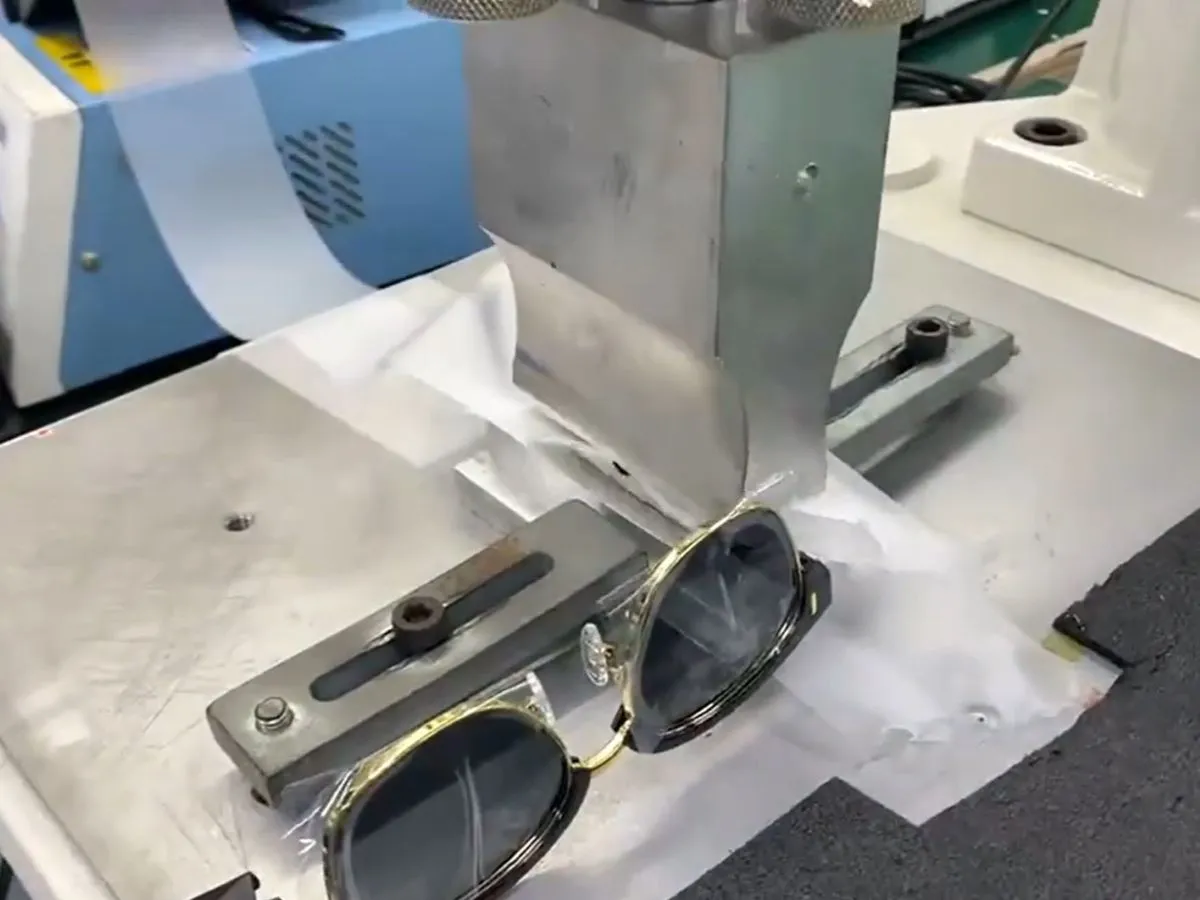
The display module, electronic core board, battery, frame, sensors and other components will be finally mechanically and electrically connected to form a complete smart glasses product.
Main Equipment:
Precision Screwdrivers, Automated Assembly Lines, Vision Inspection Systems, Specialized Fixtures.
Major Problems:
Excessive gaps cause moving parts to malfunction.
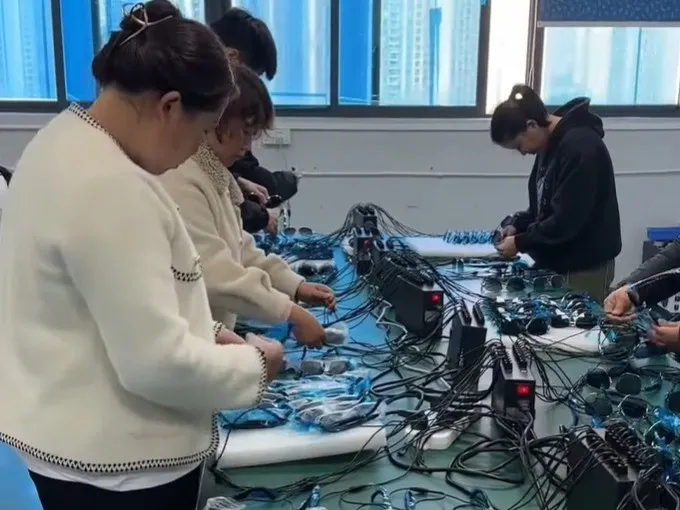
Process 7. Software Flashing & Functional Testing
Key Processes:
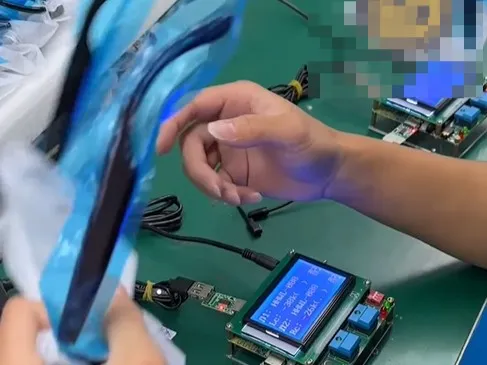
The assembled smart glasses undergo operating system and application software programming, followed by comprehensive functional testing, including display performance, touch/voice interaction, connection stability, and sensor accuracy.
Main Equipment:
Software Burning Fixture, Integrated Function Test Bench, RF Tester, Acoustic Tester.
Major Problems:
Bluetooth connection failed, speaker sound was poor.
Process 8. Appearance Inspection & Quality Control
Key Processes:
The product appearance is rigorously inspected to ensure it is free of scratches and defects. Randomized samples undergo reliability testing (such as drop testing, high and low temperature testing, and waterproof and dustproof testing) and final performance verification to ensure that the product meets all quality standards before leaving the factory.
Main Equipment:
Reliability Testing Equipment (Drop Test Machine, High And Low Temperature Test Chamber), IP Rating Testing Equipment, Aging Test Rack.
Major Problems:
Poor appearance, poor function, poor performance.
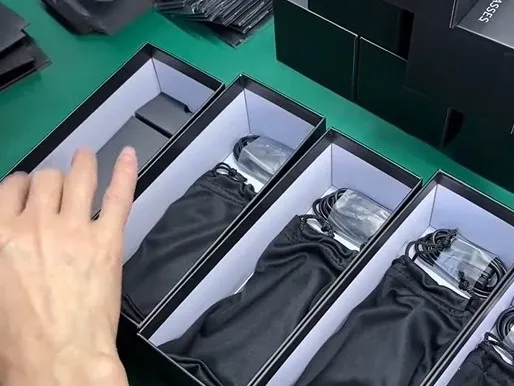
Process 9. Packing
Key Processes:
Clean, apply the film, pack it in the box, and include an instruction manual, charger, and other accessories.
Main Equipment:
Visual Inspection Equipment, Cleaning Equipment, Automated Packaging Machines.
Major Problems:
Missing labels, missing parts.
Click to review the detailed production process and common quality issues for smart glasses.
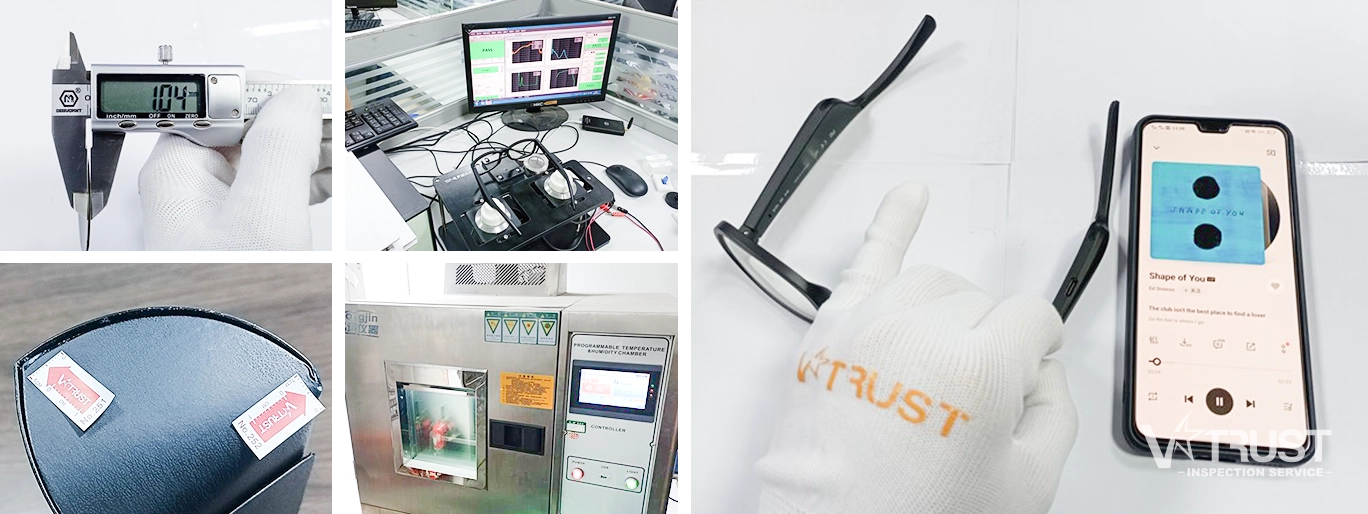
We arrange laboratory testing to confirm adherence to international safety and performance standards:
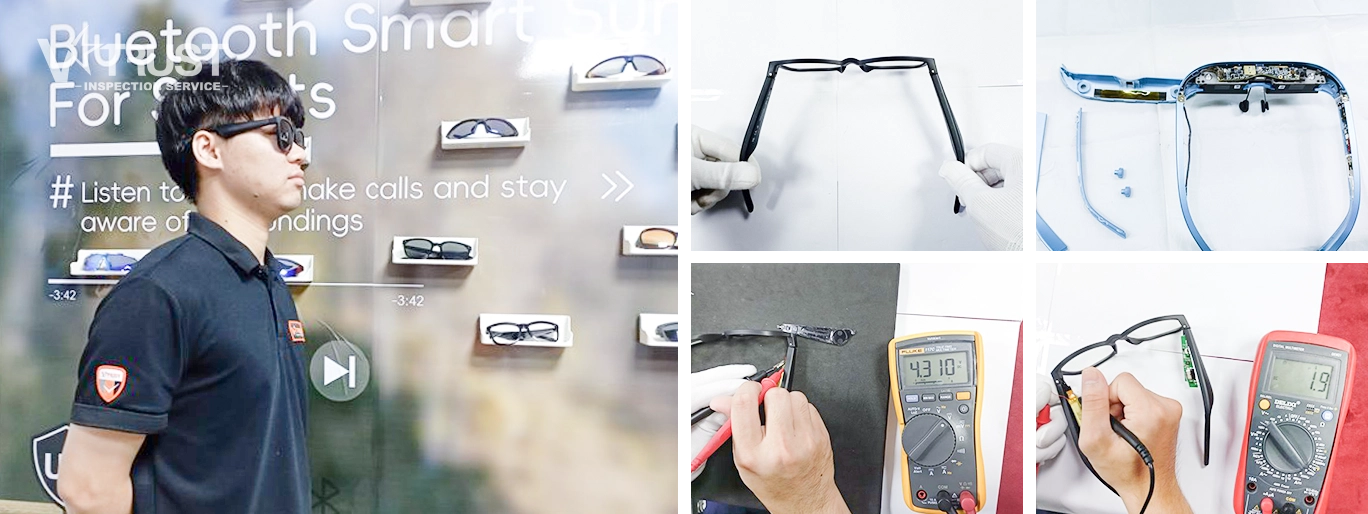
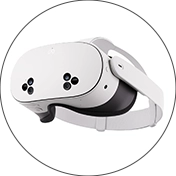
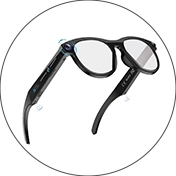
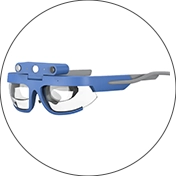
We inspect smart glasses on-site to verify quality, function, and workmanship against your exact specifications.
We audit manufacturers before your order to confirm their technical capability, process control, and quality system maturity.
We test smart glasses in our ISO 17025 labs for electrical safety, laser/LED compliance, battery performance, and regional regulatory requirements.
AI Check
Recording Check
We conduct supplier audits to verify production capabilities and compliance before order placement.
Quick verification of supplier legitimacy through:
A comprehensive evaluation covering:
V-Trust offers a comprehensive quality control solution for Smart Glasses, including Sample Checks, Production Monitoring, During Production Inspection, Pre-Shipment Inspection, and Container Loading Supervision, ensuring your products meet the highest standards of safety, performance, and reliability.
Our engineers meticulously evaluate Smart Glasses samples, assessing display clarity, optical performance, sensor accuracy, battery life, and overall ergonomic design. This crucial step helps buyers verify design specifications and functional prototypes before mass production begins.
We provide continuous on-site monitoring during Smart Glasses production, tracking critical processes such as lens integration, display calibration, circuit board assembly, and software flashing. This helps to identify and address issues like display defects, sensor misalignment, or software glitches early in the manufacturing process.
When at least 10% of the Smart Glasses order is completed, our team conducts a detailed inspection to detect early-stage problems. This includes checking for cosmetic defects, verifying component assembly, testing core functionalities like connectivity and display, and ensuring adherence to design specifications to prevent costly rework.
Before shipment, a thorough final inspection of your Smart Glasses is performed. We verify overall product quality, confirm all functionality (e.g., camera, audio, sensors, display), check for cosmetic flaws, ensure proper packaging and labeling, and conduct drop tests to ensure safe transit.
We supervise the container loading process for Smart Glasses to ensure products are handled with care, stacked correctly, and properly secured in clean, dry containers. This prevents damage from shifting, moisture, or improper handling during international transportation, safeguarding your investment.
This show features a wide array of innovative consumer electronics, including a dedicated "AI+ Products Hall" that specifically highlights cutting-edge applications in AI glasses, smart wearables, and smart terminals.
https://www.globalsources.com/trade-fair/hk-show/consumer_electronics
This fair is a major platform for the optical industry, with a prominent "Smart Eyewear" zone showcasing Smart Glasses that integrate innovative technologies like AI, wearable tech, and instant translation capabilities.
https://www.hktdc.com/event/hkopticalfair/en
This is Asia's leading conference series purely focused on wearable technologies, featuring live programs covering the latest advances in wearable devices and their applications across various industries, including health and sports.
https://wearable-technologies.com/events
Asia's leading product inspection company with full-time, professionally trained inspectors and comprehensive accreditation for inspection, audit, and lab testing services.
Why do I need product inspections for smart glasses?
If you are worried about or have experienced problems such as poor quality, incorrect shipments, or wrong packaging for goods imported from Asia, product inspection services are your solution. V-Trust product inspection service can help you have an accurate understanding of the quality of the goods without going to the factory by yourself.
Do I need to send you an approved sample for smart glasses?
It would be great if you could send the approved sample to V-Trust before the inspection for reference. Compared with product photos or specification documents, a real product sample allows V-Trust engineers to do a more thorough comparison check.
How many days in advance should I book the inspection?
Though sometimes it's possible to book next-day inspections for many manufacturing clusters where V-Trust has a large team of full-time inspectors, we recommend booking with us at least three days in advance. Early booking is important for appropriate scheduling and good preparation before the inspection.
Who will I be in contact with throughout the whole process?
There will be one dedicated account manager who will be assigned as your main contact point at V-Trust. You will receive prompt responses whenever you have any questions regarding the inspection arrangement.
How long does it take to know the inspection result?
The official report, reviewed and signed by an authorized V-Trust technical manager, will be available within 24 hours after each inspection. A same-day report is available if you would like to know about the inspection findings on the same day. V-Trust has the highest same-day report rate in the inspection industry.
What if I have questions after I check my V-Trust report?
Please don’t hesitate to contact us whenever you have any questions. V-Trust team is always available even after the inspection is completed.
Ready to ensure the quality of your products? Contact our team to discuss your specific requirements.