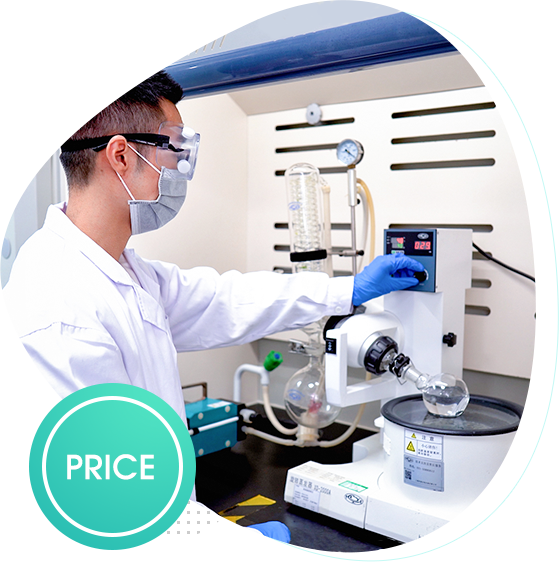

- Professional technical support team
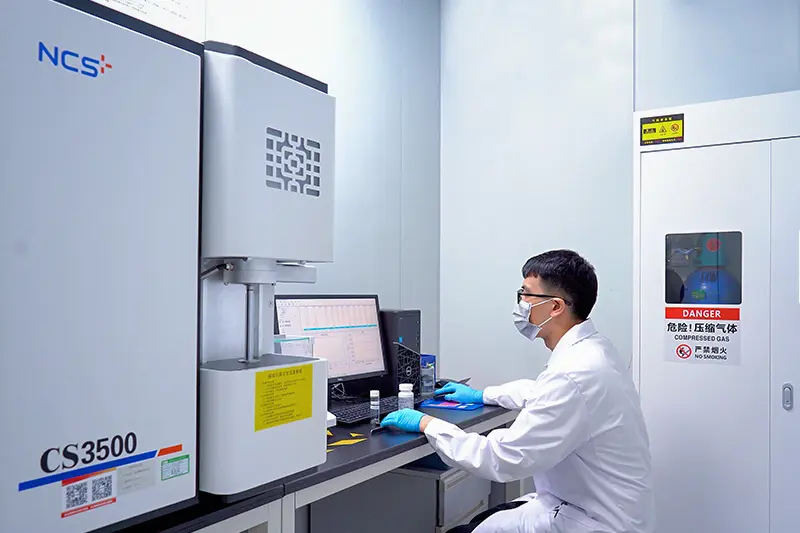
- Advanced testing equipment of famous brands
- Free testing consultancy
- On-site technical training services for suppliers
- Saving 20% in testing cost compared with other testing solution
x
Why Composition Analysis Matters
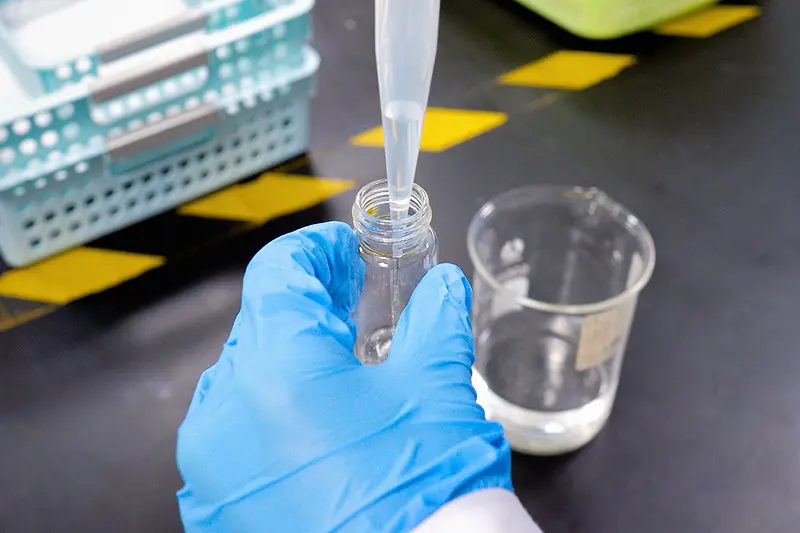
Composition analysis is essential for identifying unknown substances, determining the composition of complex materials, and verifying product quality. It enables rapid qualitative and quantitative analysis of target samples, helping to characterize raw materials, additives, specific components, contaminants, and foreign matter. This is critical for failure analysis, reverse engineering, quality control, and regulatory compliance across industries such as manufacturing, automotive, aerospace, and consumer goods.
We offer comprehensive composition analysis for three major material categories: metals, plastics, and textiles. Below are the key techniques and instruments we employ, along with common examples we analyze.
Metal Material Analysis
- Stainless steel (e.g., 304, 316, 430)
- Aluminum alloys (e.g., 6061, 7075, 5052)
- Copper alloys (brass, bronze)
- Carbon steel (e.g., A36, 1045)
- Nickel-based alloys (e.g., Inconel 625, 718)
| Instrument | Principle | Application |
|---|---|---|
| ICP-AES / ICP-OES | Uses plasma excitation to vaporize and atomize the sample. Atoms and ions emit characteristic light, which is separated by wavelength and detected for qualitative and quantitative analysis. | Trace element analysis, alloy composition, heavy metal detection. |
| XRF | Irradiates the sample with X-rays, exciting fluorescent X-rays of various wavelengths. The mixed X-rays are separated by wavelength or energy to measure intensity. | Non-destructive elemental analysis of solids, powders, and liquids. |
| Spectrophotometer (UV-Vis) | Uses a multi-wavelength light source; after passing through the sample, the absorbed light is measured and converted to concentration. | Colorimetric analysis, certain metal ion concentrations. |
| C/S Meter | Based on characteristic chemical reactions, such as precipitation, titration, and complexation, to determine the content of specific components. | Classical wet chemistry for precise quantification of major elements. |
Plastic (Polymer) Composition Analysis
- ABS (Acrylonitrile Butadiene Styrene)
- PE (Polyethylene – HDPE/LDPE)
- PMMA (Acrylic)
- PVC (Polyvinyl chloride)
- PP (Polypropylene)
- PC (Polycarbonate)
- PA (Polyamide/Nylon)
- PET (Polyethylene terephthalate)
- POM (Polyoxymethylene)
- PS (Polystyrene)
| Property Analyzed | Instrument / Method |
|---|---|
| Functional groups | FTIR |
| Melting point | DSC |
| Glass transition temperature (Tg) | DSC |
| Thermal stability / decomposition temperature | TGA |
Textile Fiber Composition Analysis

- Natural fibers: cotton, wool, silk, linen
- Synthetic fibers: polyester, nylon (polyamide), acrylic, polypropylene, spandex/elastane
- Regenerated cellulosic fibers: rayon, viscose, modal, lyocell
- Blended fabrics: e.g., cotton/polyester 65/35
| Method | Principle | Application |
|---|---|---|
| Combustion method | Fibers have distinct burning behaviors, such as flame color, smell, and residue, based on chemical composition. | Rapid field identification of major fiber types. |
| Microscopy | Longitudinal and cross-sectional morphological features are unique to fiber types. | Visual identification using optical or electron microscopy. |
| Chemical dissolution method | Solubility in specific solvents varies with fiber chemical structure. | Definitive identification under controlled conditions. |
Our Instrumentation
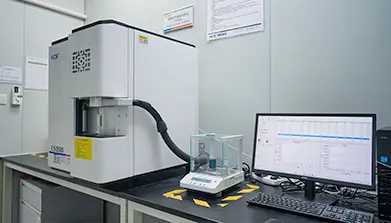
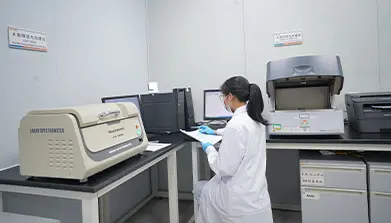
We are equipped with a full suite of analytical instruments, including:
- ICP-AES / ICP-OES for trace metal analysis
- X-ray Fluorescence Spectrometer (XRF) for non-destructive elemental screening
- UV-Vis Spectrophotometer for colorimetric quantification
- FTIR Spectrometer for polymer functional group identification
- DSC, TGA, TMA, DMA for thermal property characterization
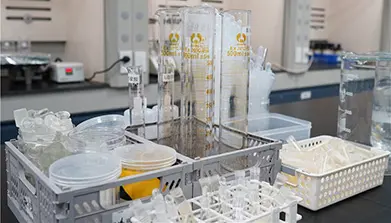
- Microscopy (optical & digital) for morphological analysis
- Standard chemical analysis lab for wet chemistry methods