20/10/2022
Why Approved Samples are Worth the Investment
Why Approved Samples are Worth the Investment

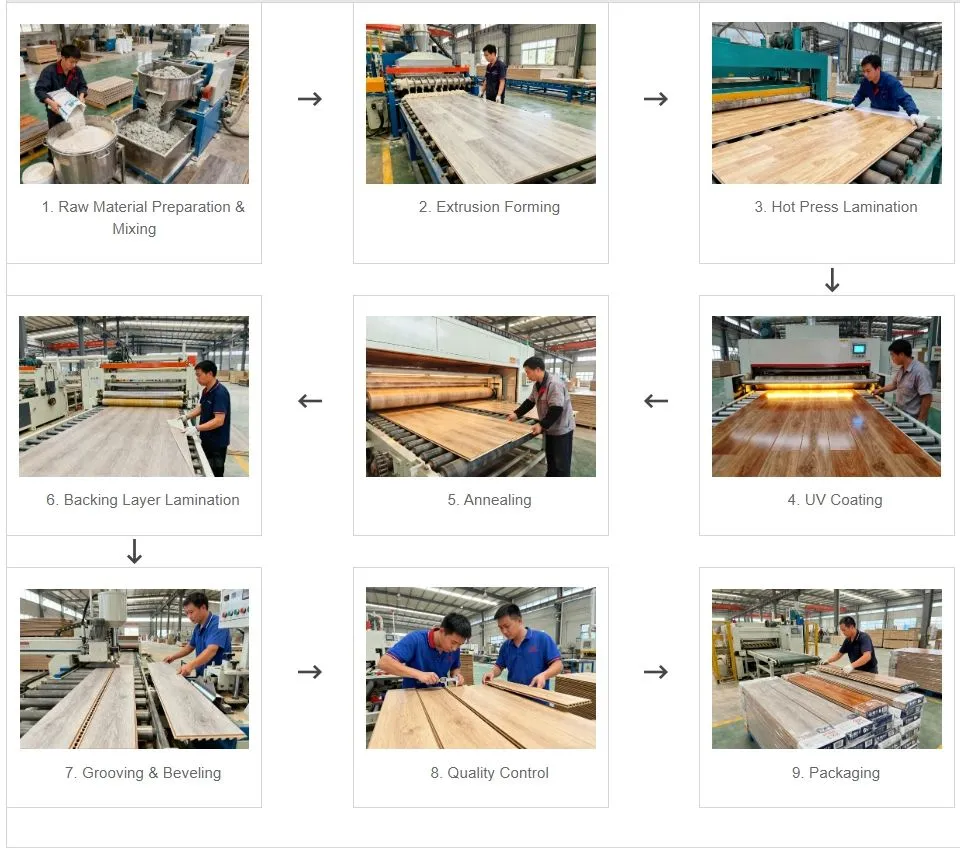
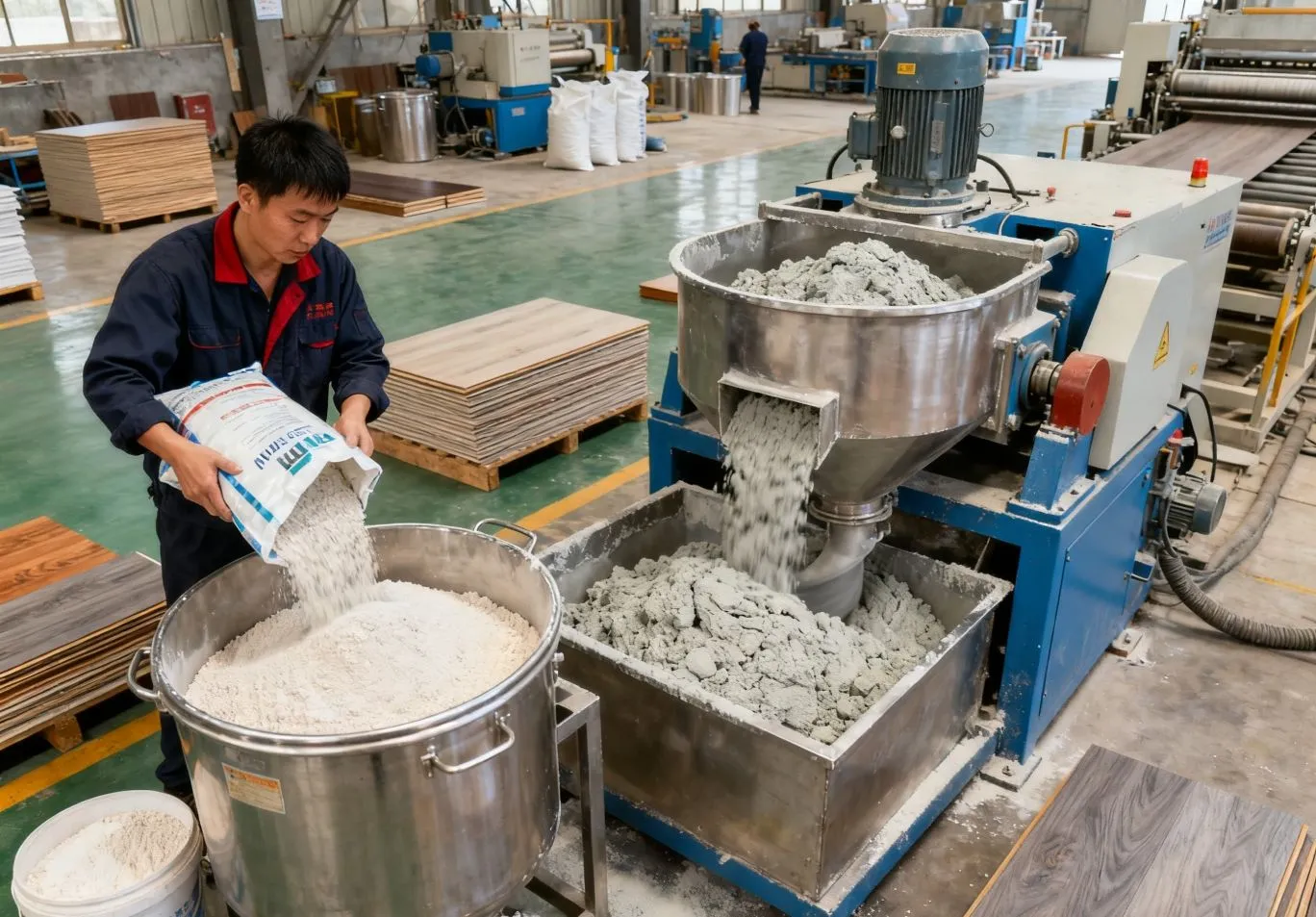
Process 1. Raw Material Preparation & Mixing
Key Processes:
Precisely measuring and uniformly mixing raw materials such as stone powder (calcium carbonate), polyvinyl chloride resin (PVC), stabilizers, lubricants, and plasticizers. This involves high-speed hot mixing followed by cold mixing to ensure uniform material dispersion.
Main Equipment:
Automatic Batching Systems, High-Speed Mixers, Cooling Mixers.
Common Issues:
Inaccurate raw material proportions affecting product performance. Uneven mixing leading to product defects. Material dampness affecting extrusion quality.
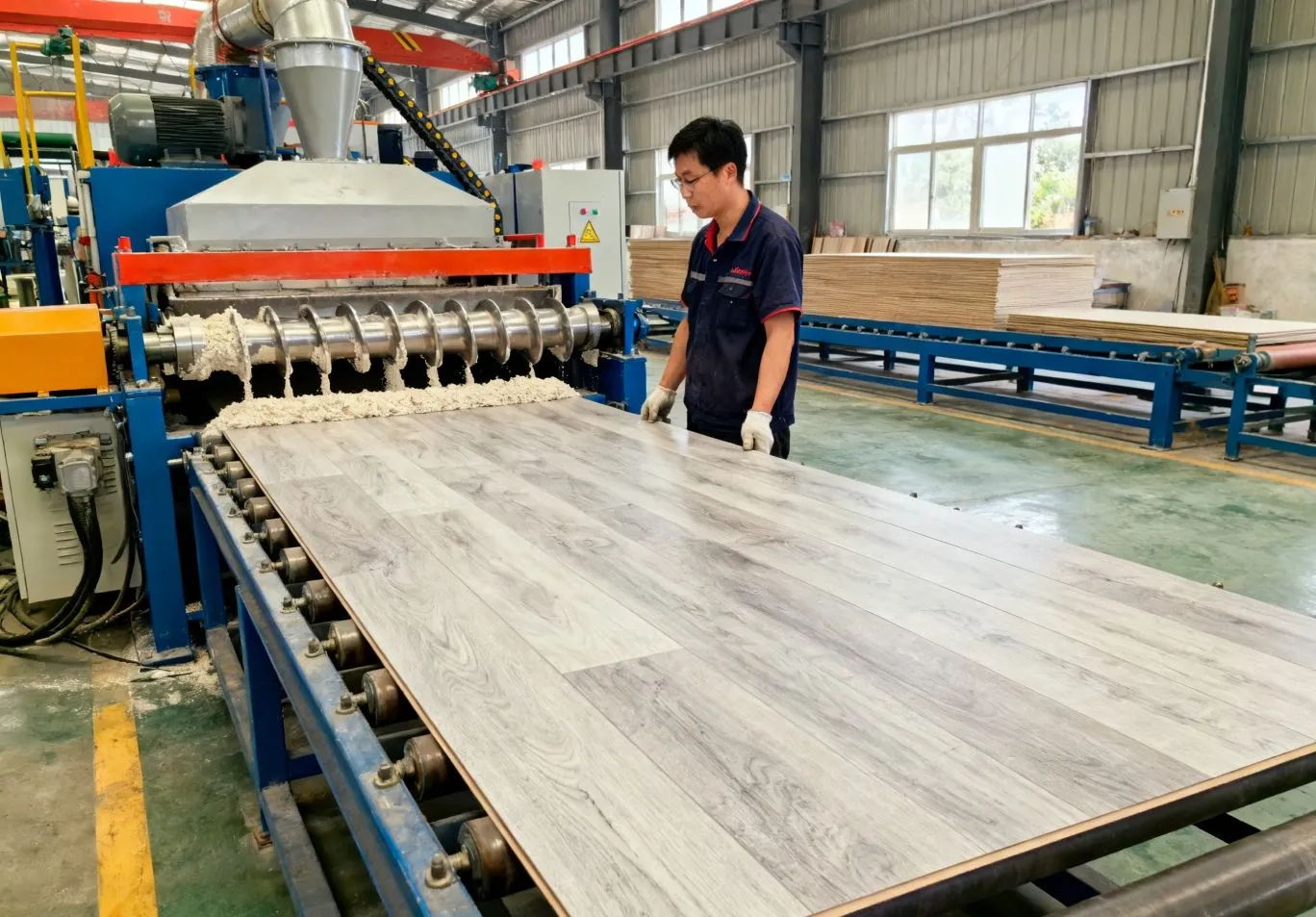
Process 2. Extrusion Forming
Key Processes:
Feeding the mixed material into a twin-screw extruder, plasticizing and melting it at high temperatures, and extruding it through a die to form the SPC core board.
Main Equipment:
Twin-Screw Extruders, T-Die Head, Three-Roll Calender.
Common Issues:
Uneven extrusion thickness. Surface bubbles or impurities. Improper control of extrusion speed and temperature leading to board deformation.
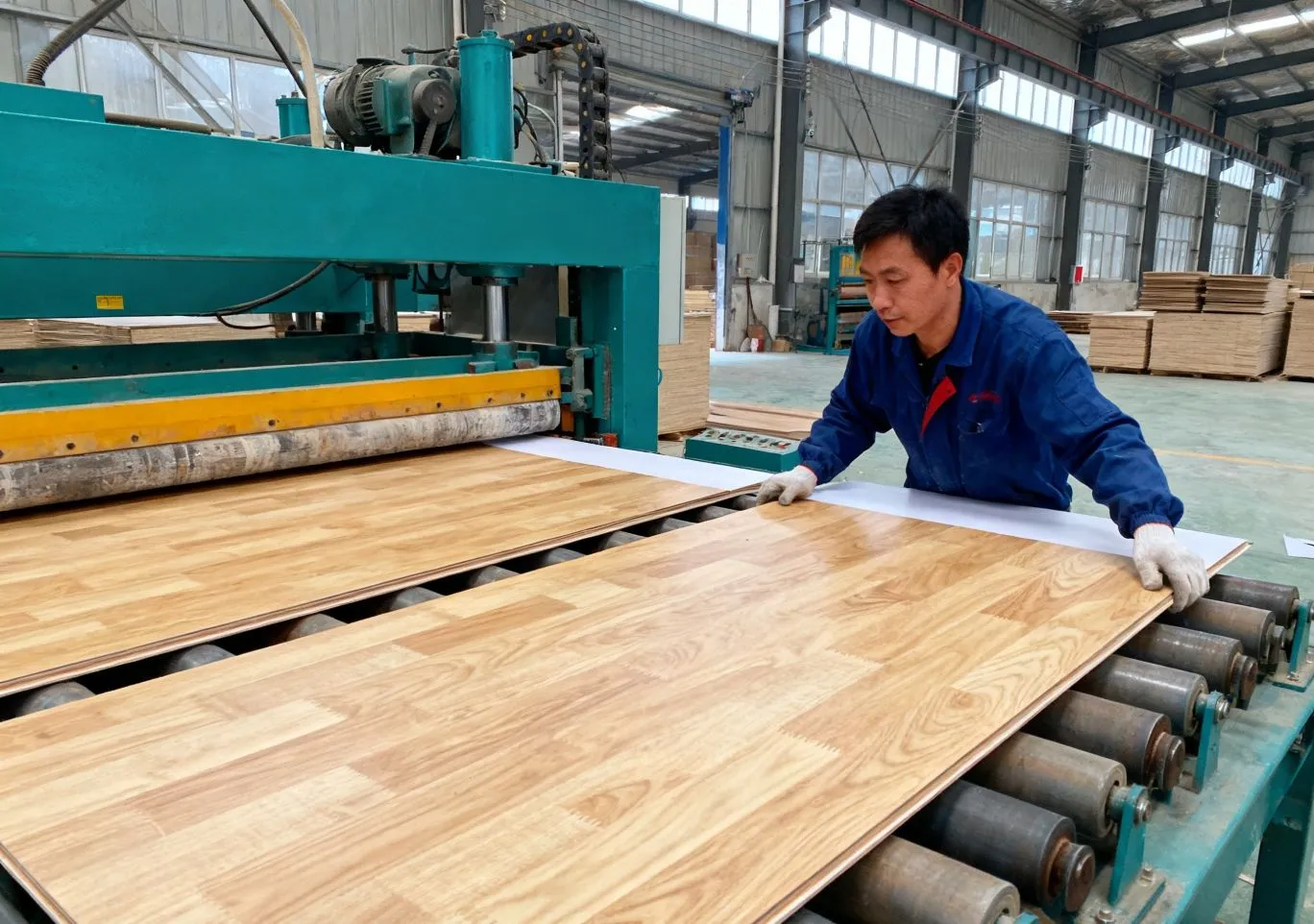
Process 3. Hot Press Lamination
Key Processes:
Laminating the SPC core board with a decorative film (design layer) and a wear layer using a hot press machine. The decorative film provides the aesthetic texture, and the wear layer offers surface protection.
Main Equipment:
Hot Press Machines, Laminating Machines.
Common Issues:
Weak lamination leading to delamination. Surface bubbles or wrinkles. Improper control of hot press temperature and pressure.
Process 4. UV Coating
Key Processes:
Applying multiple layers of UV coating to the laminated flooring surface and curing them with ultraviolet light. This enhances the flooring's wear resistance, stain resistance, and scratch resistance, and provides different gloss levels.
Main Equipment:
UV Coating Machines, UV Curing Lamps.
Common Issues:
Uneven UV coating. Poor coating adhesion. Incomplete curing leading to sticky surfaces.
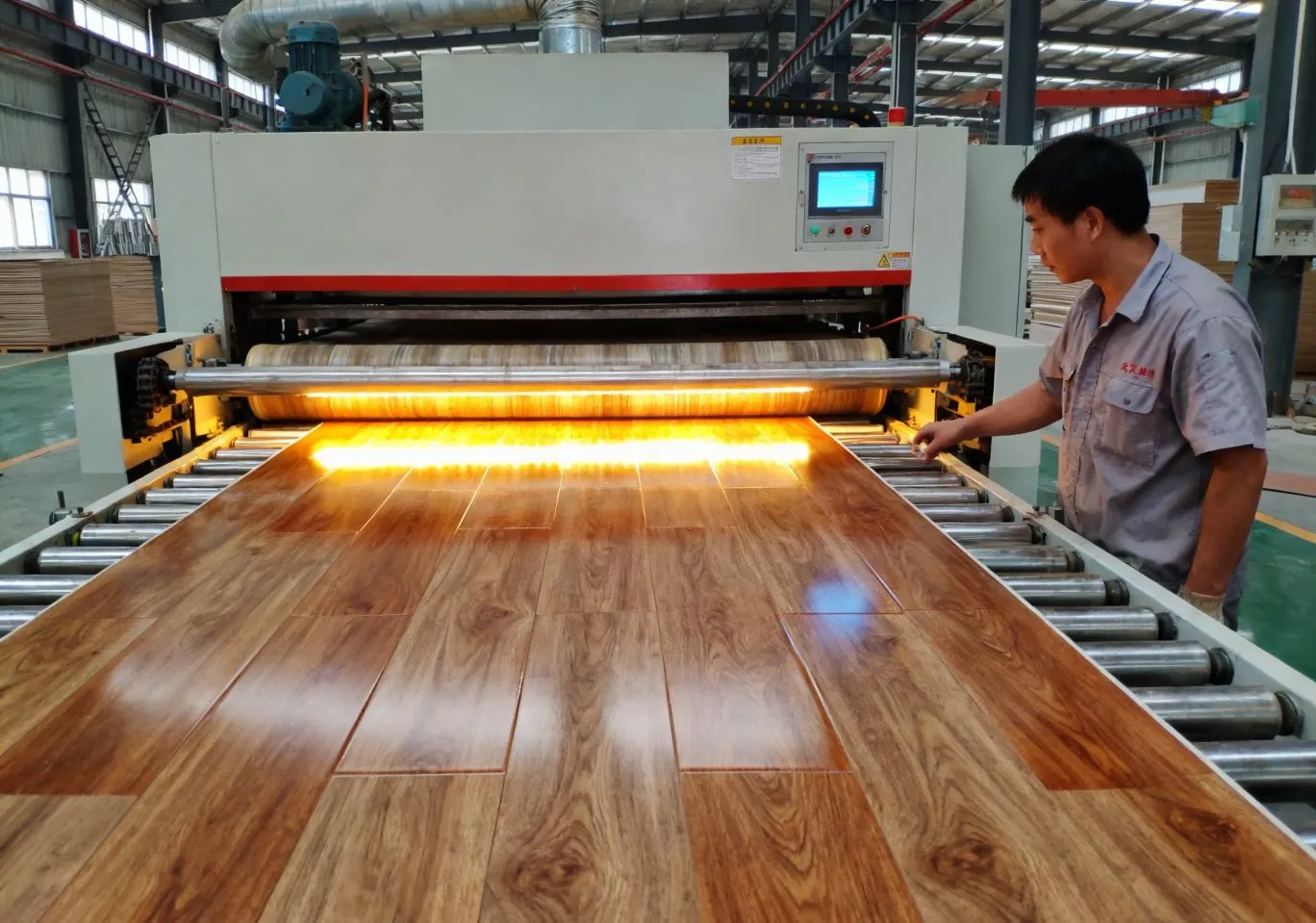
Process 5. Annealing
Key Processes:
Sending the UV-coated flooring boards into an annealing oven for heating and slow cooling under controlled temperatures. This process eliminates internal stresses generated during production, improving the flooring's dimensional stability and flatness.
Main Equipment:
Annealing Ovens.
Common Issues:
Insufficient annealing leading to dimensional instability or warping. Over-annealing affecting material properties.
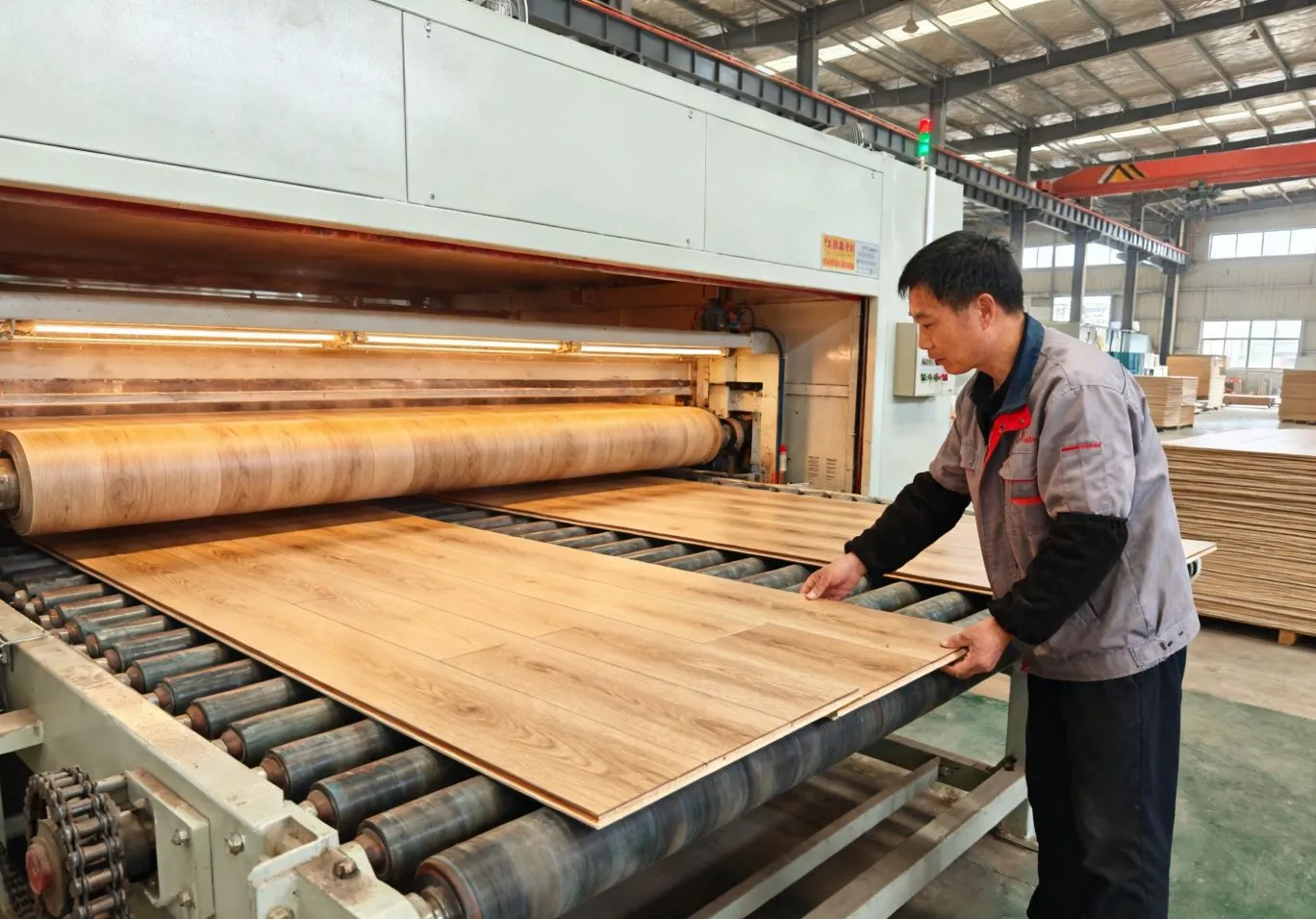
Process 6. Backing Layer Lamination
Key Processes:
Laminating an IXPE or EVA acoustic underlayment to the back of the SPC flooring to provide better foot feel, sound absorption, and moisture resistance.
Main Equipment:
Laminating Machines, Hot Press Rollers.
Common Issues:
Weak lamination leading to delamination. Bubbles or wrinkles in the backing layer.
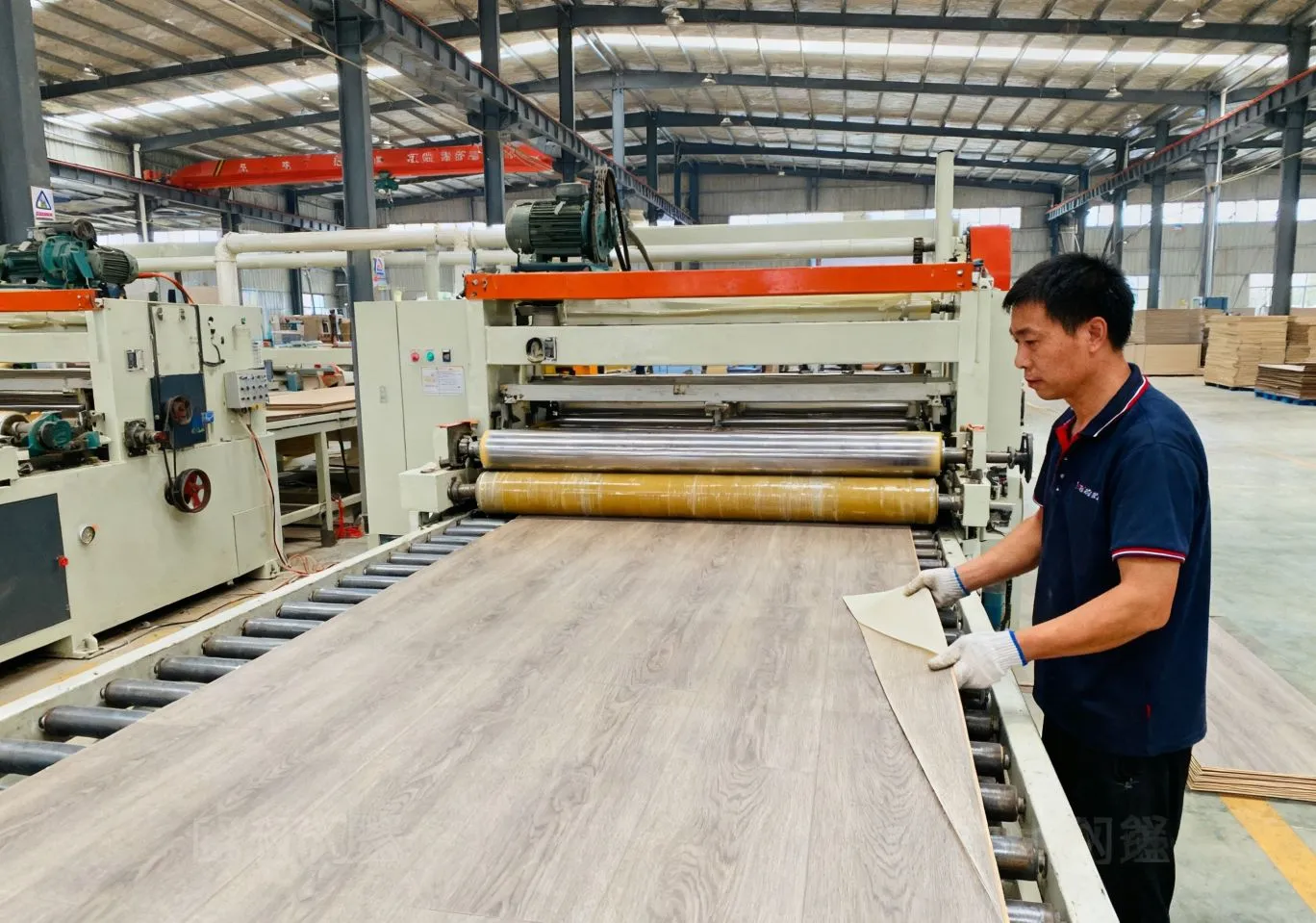
Process 7. Grooving & Beveling
Key Processes:
Precisely grooving (click system) and beveling the annealed flooring boards to create interlocking structures for easy installation.
Main Equipment:
Double-End Tenoners, Beveling Machines.
Common Issues:
Insufficient grooving precision leading to loose clicks or difficult installation. Uneven beveling affecting aesthetics.
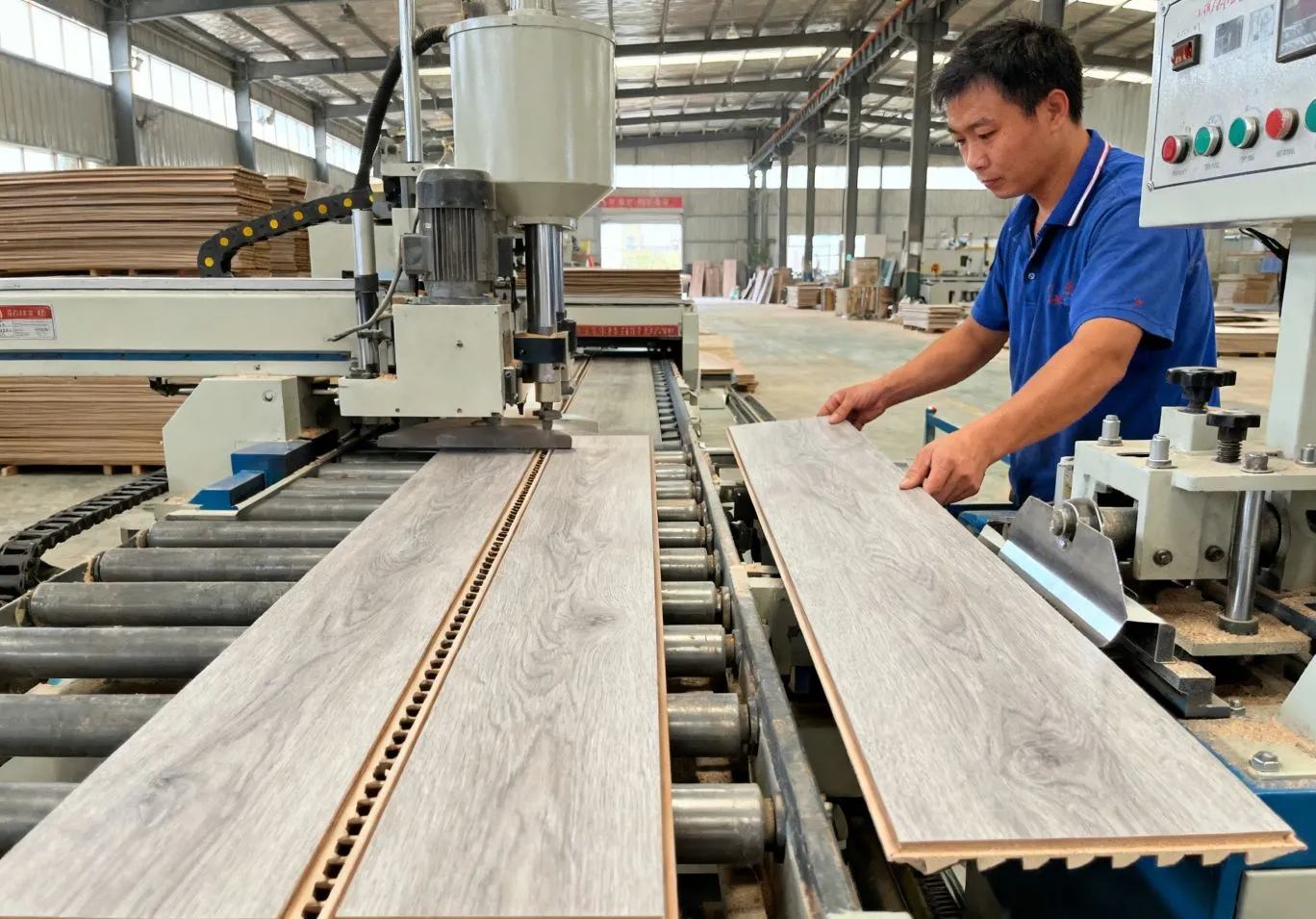
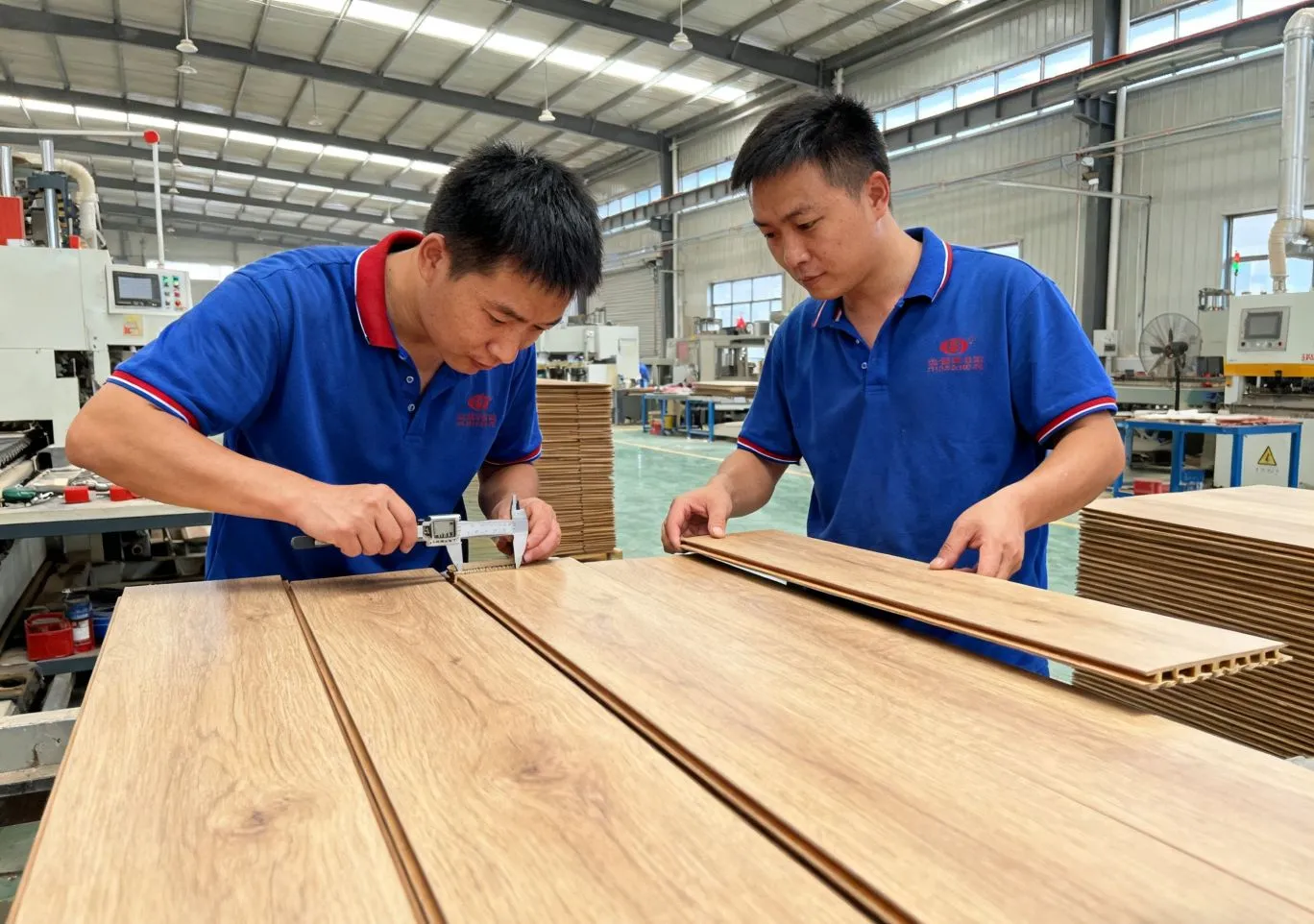
Process 8. Quality Control
Key Processes:
Conducting rigorous quality inspections on finished SPC flooring, including dimensional accuracy, thickness, flatness, wear resistance, peel strength, impact resistance, slip resistance, and formaldehyde emission, to ensure compliance with international standards.
Main Equipment:
Dimensional Measuring Tools, Wear Resistance Testers, Peel Strength Testers, Impact Testers, Formaldehyde Detectors.
Common Issues:
Inconsistent inspection standards. Manual inspection prone to omissions. Difficulty detecting minor defects.
Process 9. Packaging
Key Processes:
Cleaning and labeling qualified SPC flooring, then protectively packaging it with appropriate materials (e.g., cartons, protective film), and including installation instructions.
Main Equipment:
Packaging Machines, Labeling Machines.
Common Issues:
Improper packaging leading to product damage during transportation. Incorrect or unclear packaging information.
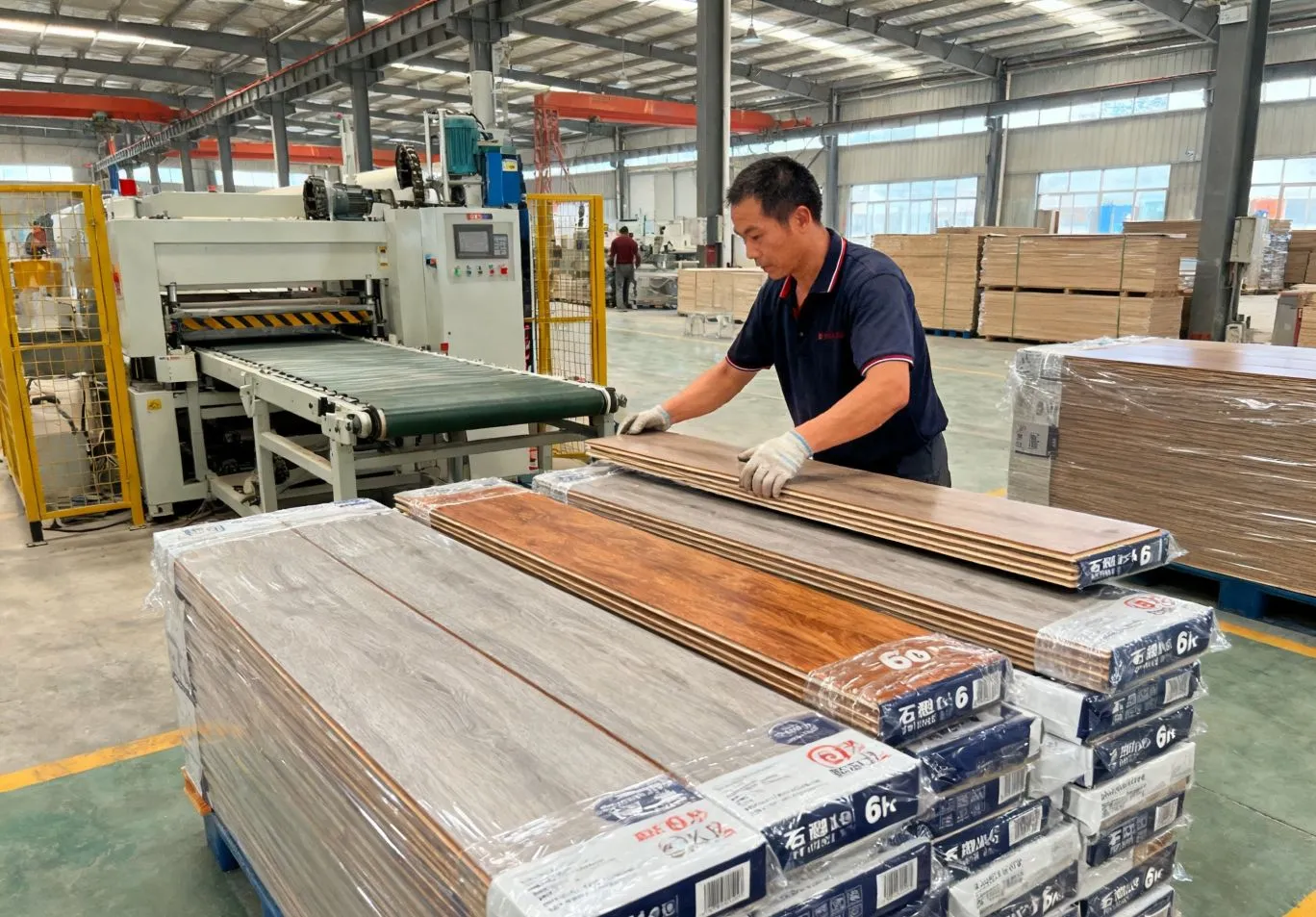
Click to review the detailed production process and common quality issues for SPC flooring.
We arrange laboratory testing to confirm adherence to international safety and performance standards:
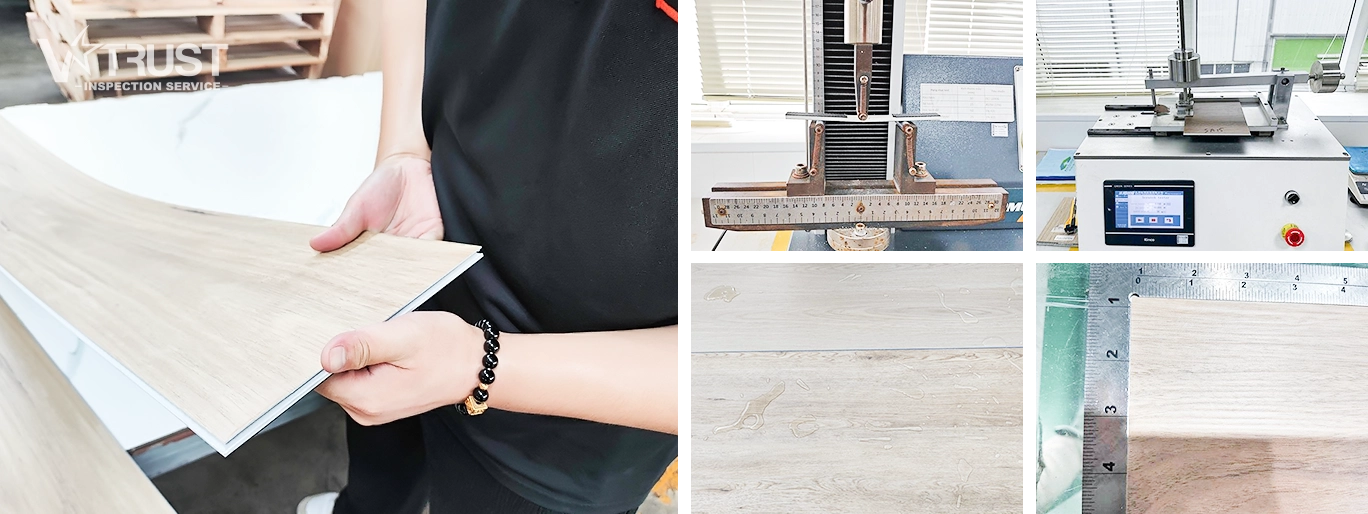
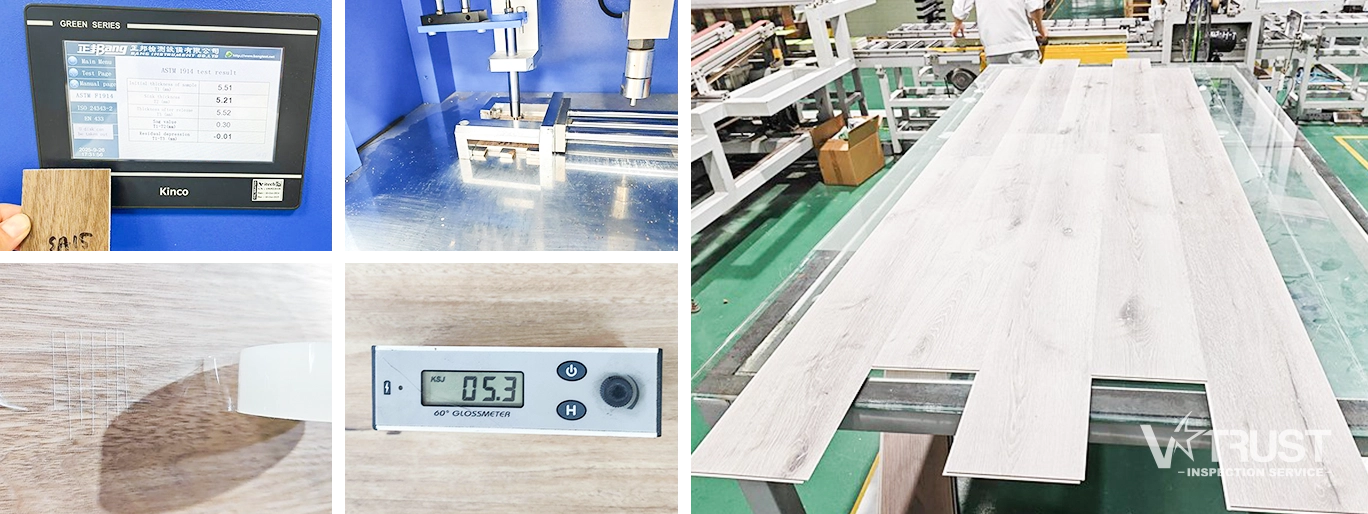
Verify quality, functionality, and craftsmanship through on-site inspections.
Ensure compliance with international safety, performance, and regulatory standards.
Fitting Check
Gloss Check
We conduct supplier audits to verify production capabilities and compliance before order placement.
Quick verification of supplier legitimacy through:
A comprehensive evaluation covering:
V-Trust offers a comprehensive quality control solution that spans the entire production lifecycle, from initial samples to final shipment, including Sample Checks, Production Monitoring, During Production Inspection, Pre-Shipment Inspection, and Container Loading Supervision, ensuring your Building Materials consistently meet stringent quality and safety standards.
Our engineers rigorously evaluate building material samples for critical properties such as strength, dimensional accuracy, material composition, and surface finish, ensuring they align with design specifications and regulatory requirements before mass production commences.
We provide continuous on-site monitoring during the manufacturing of Building Materials, observing processes like concrete mixing, steel fabrication, or tile pressing to identify and address issues such as incorrect material ratios, improper curing, or dimensional inconsistencies in real-time.
Conducted when a significant portion of the Building Materials order is completed, this inspection focuses on detecting early-stage defects like structural flaws in pre-cast elements, inconsistent finishes on panels, or deviations in material strength, allowing for timely corrective actions.
A thorough final inspection before shipment verifies the overall quality, quantity, and conformity of Building Materials to your specifications, including checks on structural integrity, aesthetic appearance, packaging integrity, and proper labeling for safe transit and site delivery.
We oversee the loading of Building Materials into containers, ensuring proper handling, secure stacking, and adequate protection to prevent damage, shifting, or contamination during transit, guaranteeing that materials arrive at the construction site in optimal condition.
Phase 1 of the Canton Fair specifically focuses on industrial products, including Building Materials, hardware, machinery, and electrical appliances.
https://www.cantonfair.org.cn/
BAUMA CHINA is recognized as the largest trade fair of its kind in Asia, specializing in construction machinery, building material machines, mining equipment, and construction vehicles.
https://bauma-china.com/en/
Big 5 Global covers the full cycle of the construction industry, including planning, design, materials, construction, fit-out, operations, and decommissioning.
https://www.big5global.com/
Asia's leading product inspection company with full-time, professionally trained inspectors and comprehensive accreditation for inspection, audit, and lab testing services.
Why do I need product inspections for building materials?
If you are worried about or have experienced problems such as poor quality, incorrect shipments, or wrong packaging for goods imported from Asia, product inspection services is your solution. V-Trust product inspection service can help you have accurate understanding about the quality of the goods without going to the factory by yourself.
Do I need to send you an approved sample for building materials?
It would be great if you could send the approved sample to V-Trust before the inspection for reference. Compared with product photos or specification documents, a real product sample allows V-Trust engineers to do a more thorough comparison check.
How many days in advance should I book the inspection?
Though sometimes it's possible to book next-day inspections for many manufacturing clusters where V-Trust has a large team of full-time inspectors, we recommend booking with us at least three days in advance. Early booking is important for appropriate scheduling and good preparation before the inspection.
Who will I be in contact with throughout the whole process?
There will be one dedicated account manager who will be assigned as your main contact point at V-Trust. You will receive prompt responses whenever you have any questions regarding the inspection arrangement.
How long does it take to know the inspection result?
The official report, reviewed and signed by an authorized V-Trust technical manager, will be available within 24 hours after each inspection. Same day report is available if you would like to know about the inspection findings on the same day. V-Trust has the highest same day report rate in the inspection industry.
What if I have questions after I check my V-Trust report?
Please don’t hesitate to contact us whenever you have any questions. V-Trust team is always available even after the inspection is completed.
Ready to ensure the quality of your products? Contact our team to discuss your specific requirements.