2020-07-09
Top 3 Reasons to Use an Inspection Company
Top 3 Reasons to Use an Inspection Company

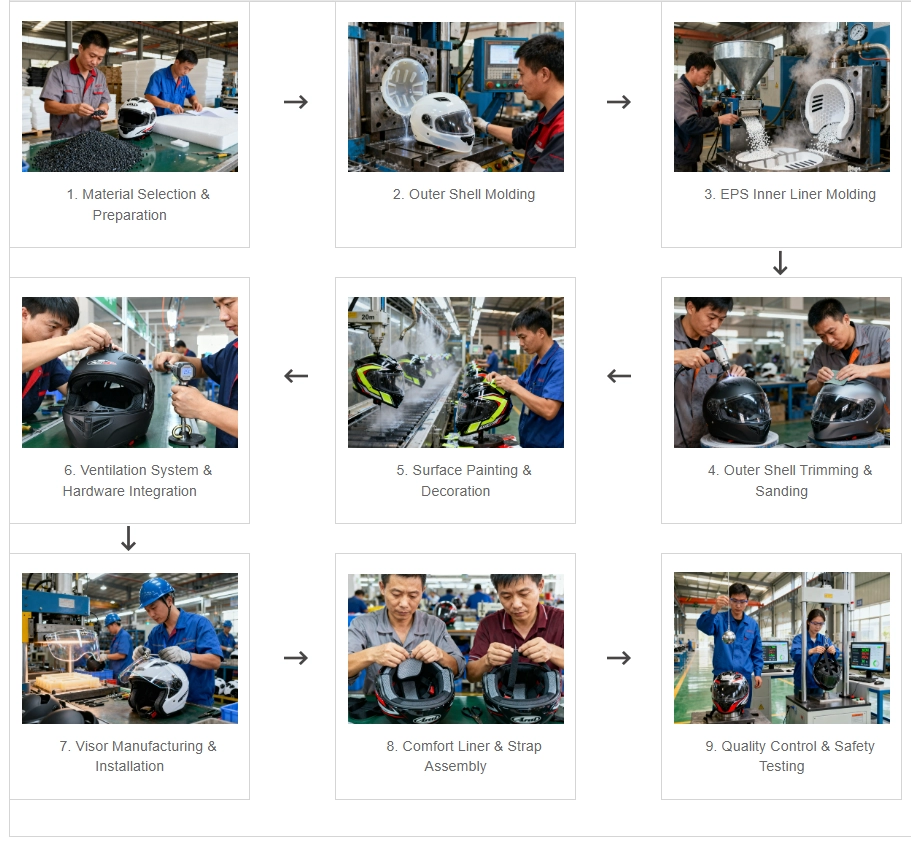
Process 1. Material Selection & Preparation
Key Processes:
Selecting outer shell materials (e.g., fiberglass, carbon fiber, polycarbonate), inner liner materials (EPS foam), comfort liner materials (fabric, sponge), and other accessory materials based on helmet type and safety standards (e.g., DOT, ECE, Snell). Conducting quality inspection and pre-treatment of materials.
Main Equipment:
Material Testing Equipment, Cutting Machines.
Major Problem:
Substandard material quality affecting helmet safety performance.
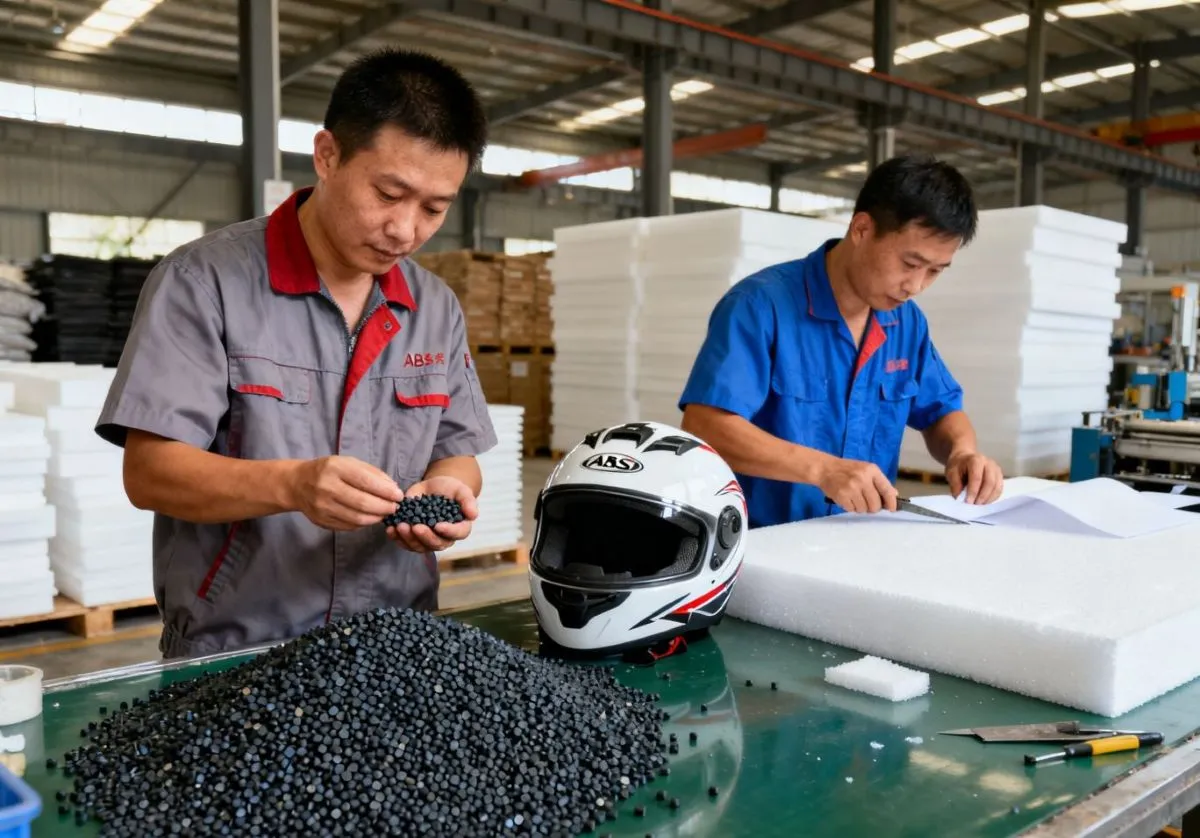
Process 2. Outer Shell Molding
Key Processes:
Composite Materials (Fiberglass, Carbon Fiber): Laying pre-preg or fiber fabric layers in a mold, then impregnating with resin and hot-pressing to cure and form the outer shell.
Thermoplastic Materials (Polycarbonate): Using injection molding to inject molten plastic into a mold for cooling and solidification.
Main Equipment:
Molds, Hot Presses, Injection Molding Machines.
Major Problem:
Uneven shell thickness, Bubbles or delamination, Surface defects, Mold wear.
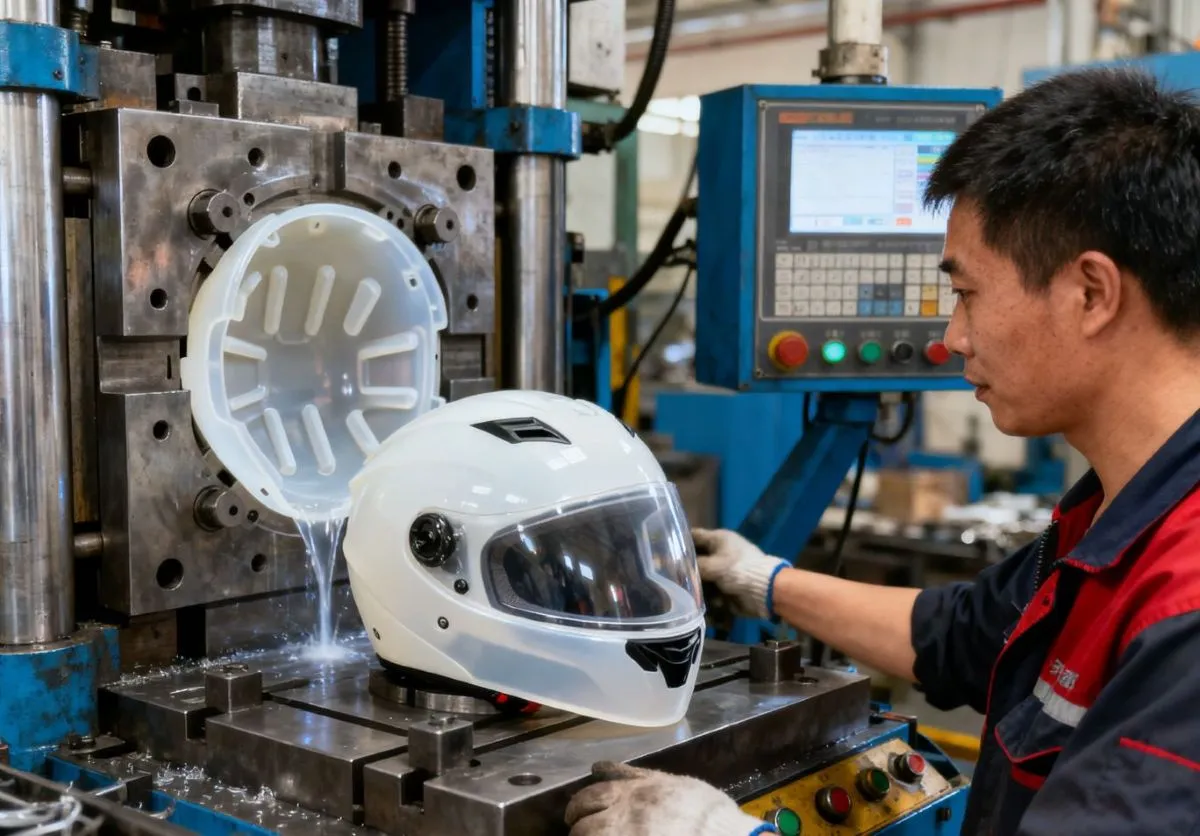
Process 3. EPS Inner Liner Molding
Key Processes:
Injecting Expanded Polystyrene (EPS) beads into a mold, then heating with steam to expand and bond them, forming an energy-absorbing inner liner.
Main Equipment:
EPS Molding Machines, Molds.
Major Problem:
Uneven EPS density affecting energy absorption, Molding defects like shrinkage, cracks.
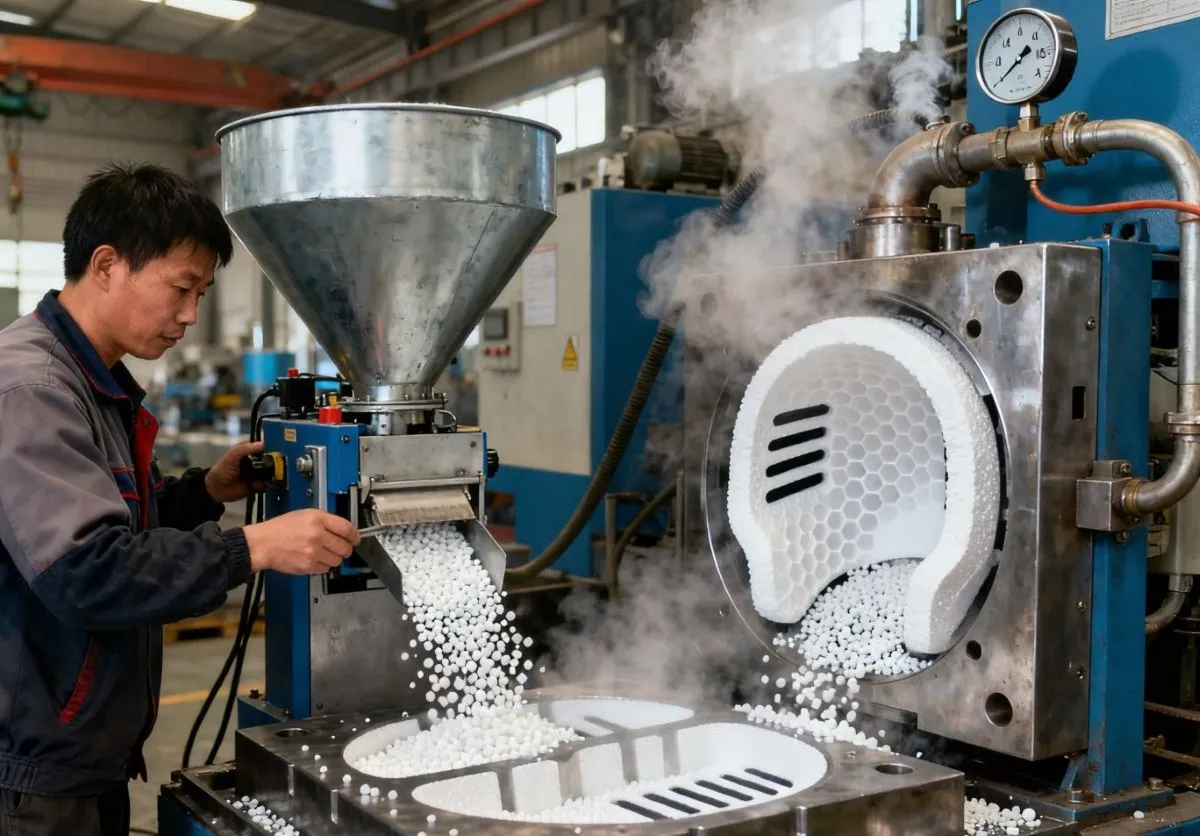
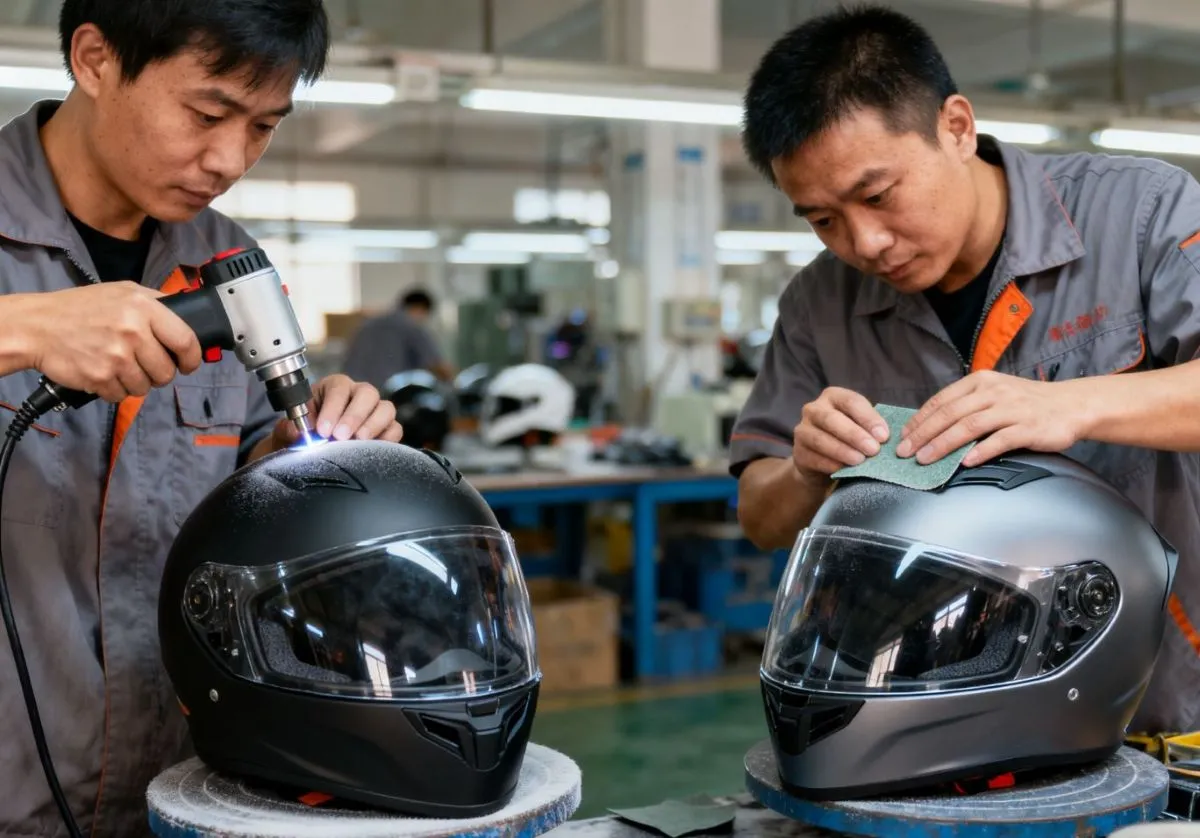
Process 4. Outer Shell Trimming & Sanding
Key Processes:
Trimming the edges of the formed outer shell to remove excess material and burrs. Subsequently, performing multiple passes of sanding to achieve a smooth and even surface, in preparation for painting.
Main Equipment:
Edge Trimming Machines, Sanding Machines, Hand Sanding Tools.
Major Problem:
Improper trimming causing shell damage, Uneven sanding affecting paint quality.
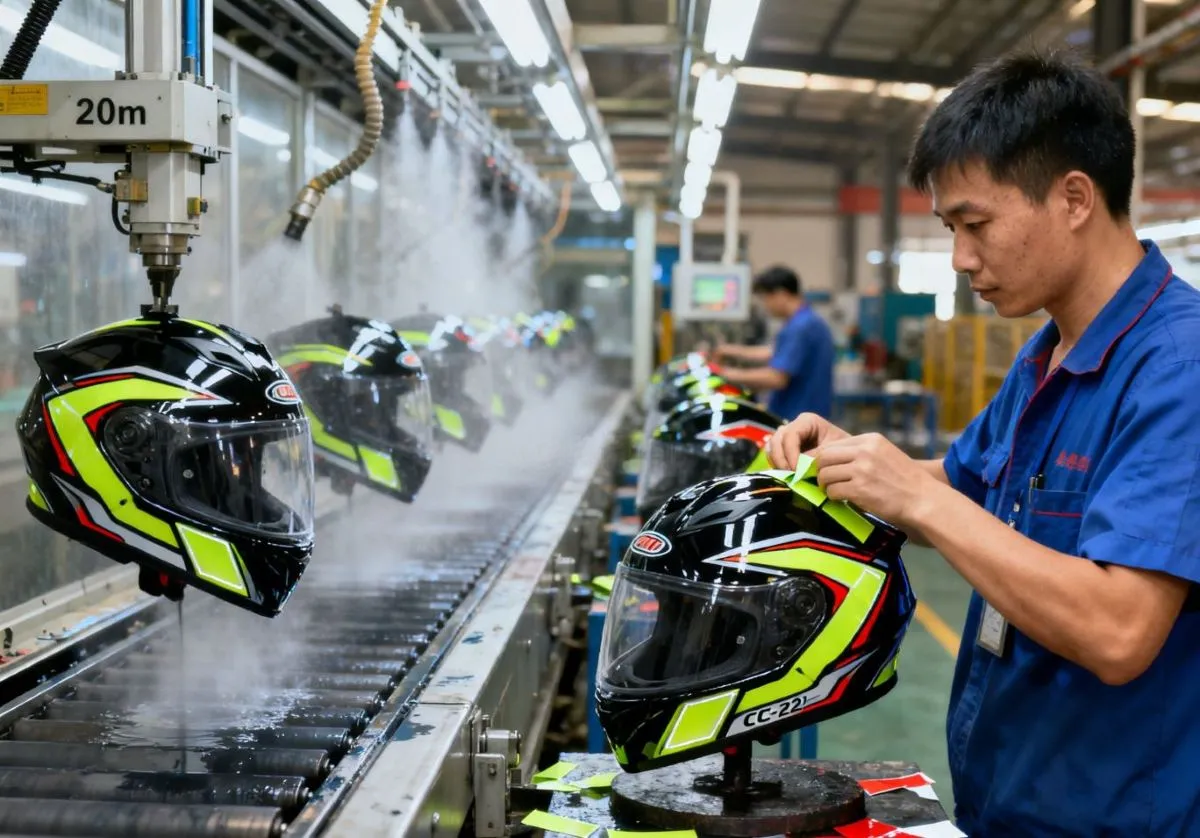
Process 5. Surface Painting & Decoration
Key Processes:
Cleaning, priming, multi-layer painting, decal application, and clear coating the sanded outer shell to give the helmet an aesthetic appearance and protective layer.
Main Equipment:
Cleaning Lines, Paint Booths, Baking Ovens, Water Transfer Printing Equipment.
Major Problem:
Poor coating adhesion leading to peeling, Uneven color or color variation, Decal bubbles or misalignment.
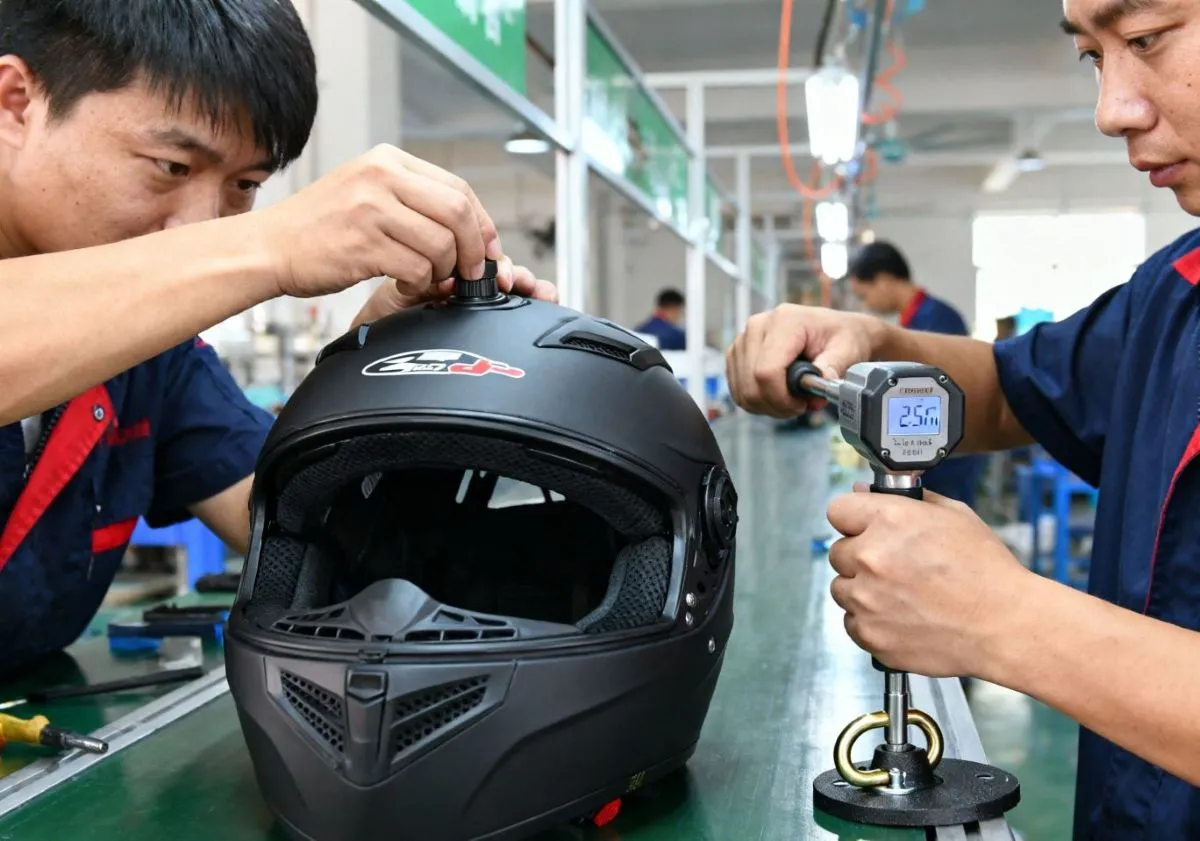
Process 6. Ventilation System & Hardware Integration
Key Processes:
Installing vents, switches, fasteners, and other hardware components on the helmet outer shell. These parts are typically secured by drilling, riveting, or bonding.
Main Equipment:
Drilling Machines, Riveting Machines, Adhesive Dispensing Machines.
Major Problem:
Insecure hardware installation, Drilling position deviation, Adhesive overflow or insufficiency.
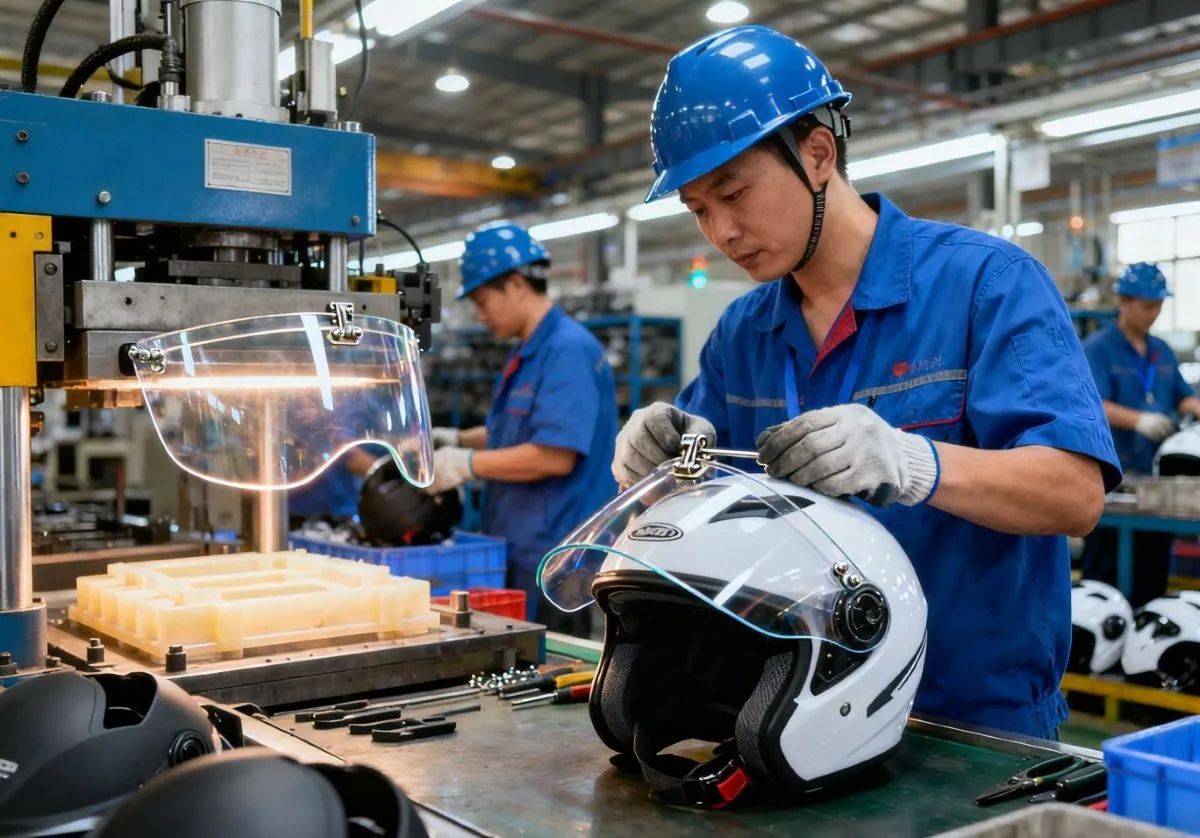
Process 7. Visor Manufacturing & Installation
Key Processes:
Visors are typically injection-molded from polycarbonate and treated with anti-scratch, anti-fog, and UV protection coatings. Subsequently, the visor is installed onto the helmet, ensuring smooth opening/closing and good sealing.
Main Equipment:
Injection Molding Machines, Coating Equipment, Visor Installation Jigs.
Major Problem:
Visor optical distortion, Coating defects like scratches, bubbles, Improper installation leading to rough operation or air leakage.
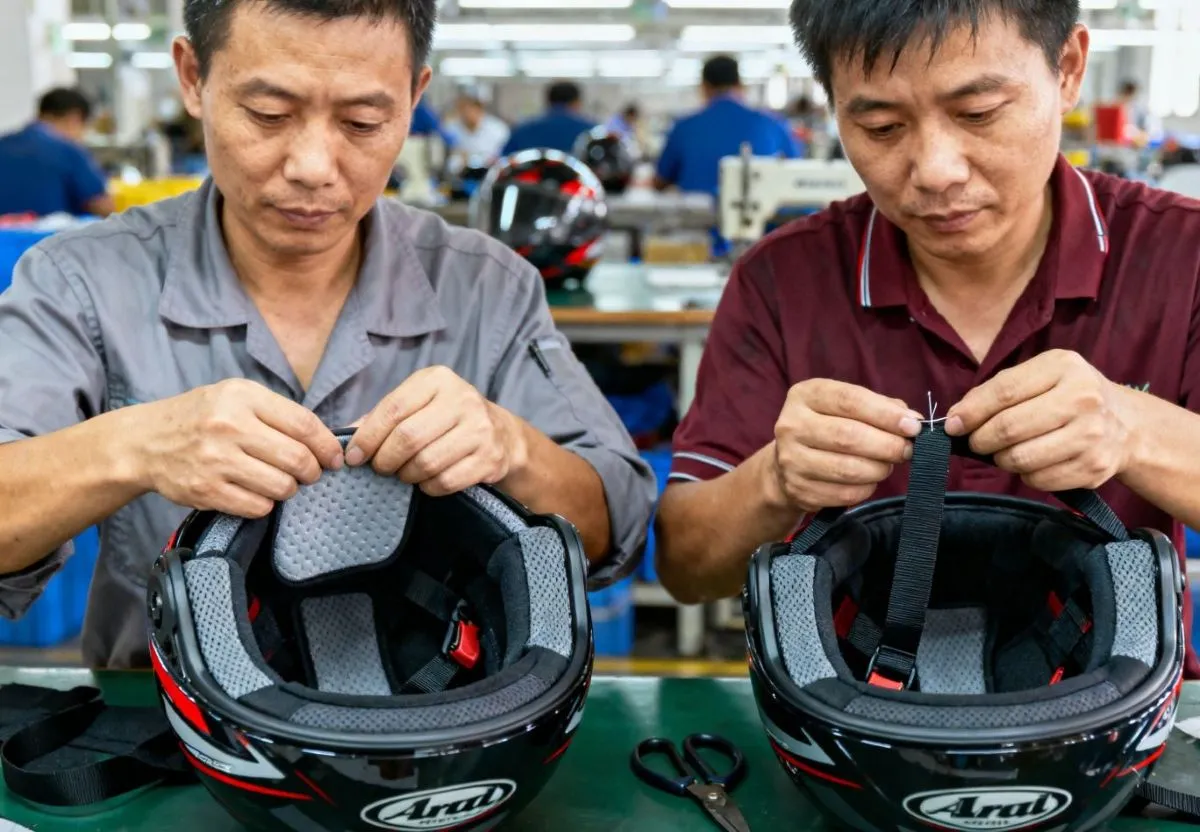
Process 8. Comfort Liner & Strap Assembly
Key Processes:
Sewing and bonding comfort liners (removable or fixed) onto the EPS liner, and installing chin straps with D-rings or quick-release buckles.
Main Equipment:
Sewing Machines, Adhesive Dispensing Machines, Buckle Installation Machines.
Major Problem:
Insecure liner stitching, Strap installation not meeting safety standards, Poor comfort of liner materials.
Process 9. Quality Control & Safety Testing
Key Processes:
Conducting comprehensive quality inspection and safety testing on finished helmets, including impact absorption tests, penetration tests, retention system strength tests, field of vision tests, weight, dimensions, and visual defects, to ensure compliance with all applicable safety standards.
Main Equipment:
Impact Testing Machines, Penetration Testing Machines, Tensile Testing Machines, Field of Vision Testing Equipment, Dimensional Measuring Tools.
Major Problem:
Test results not meeting safety standards, Hidden defects not detected.
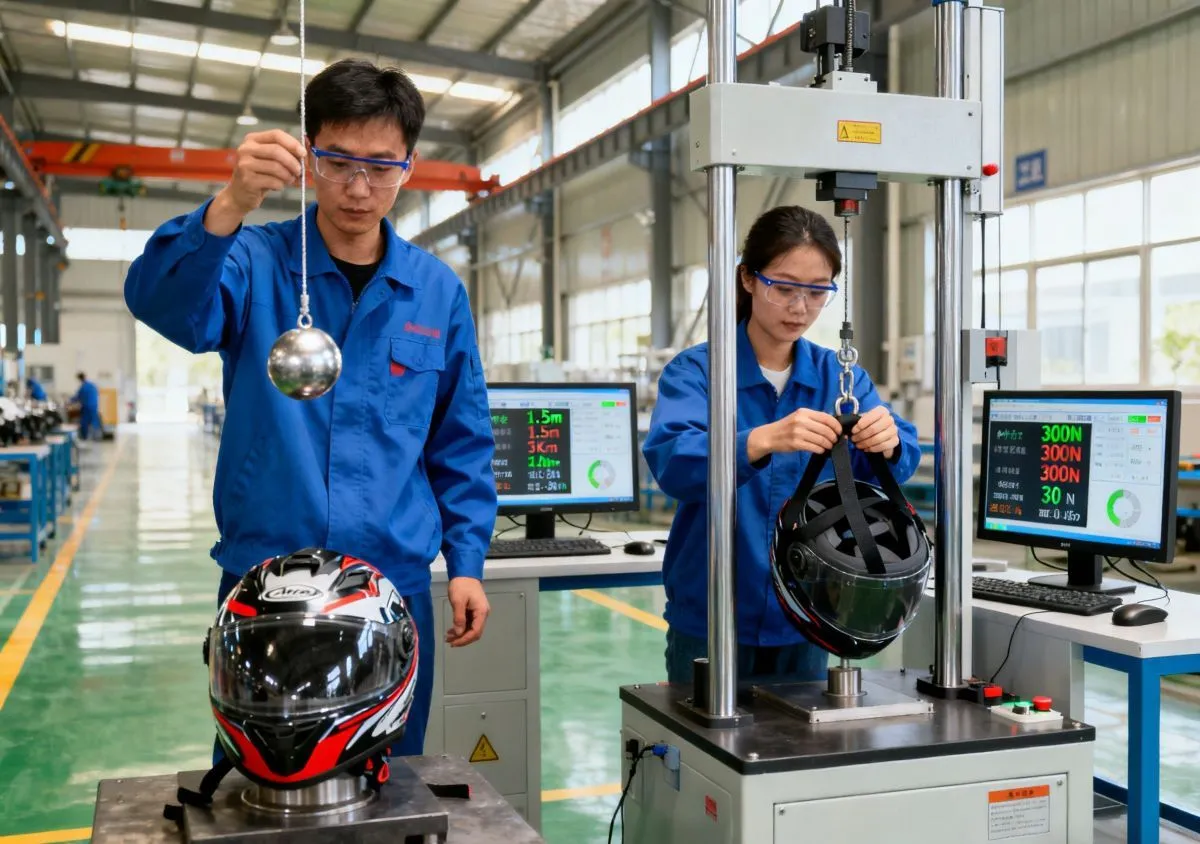
Click to review the detailed production process and common quality issues for helmets.
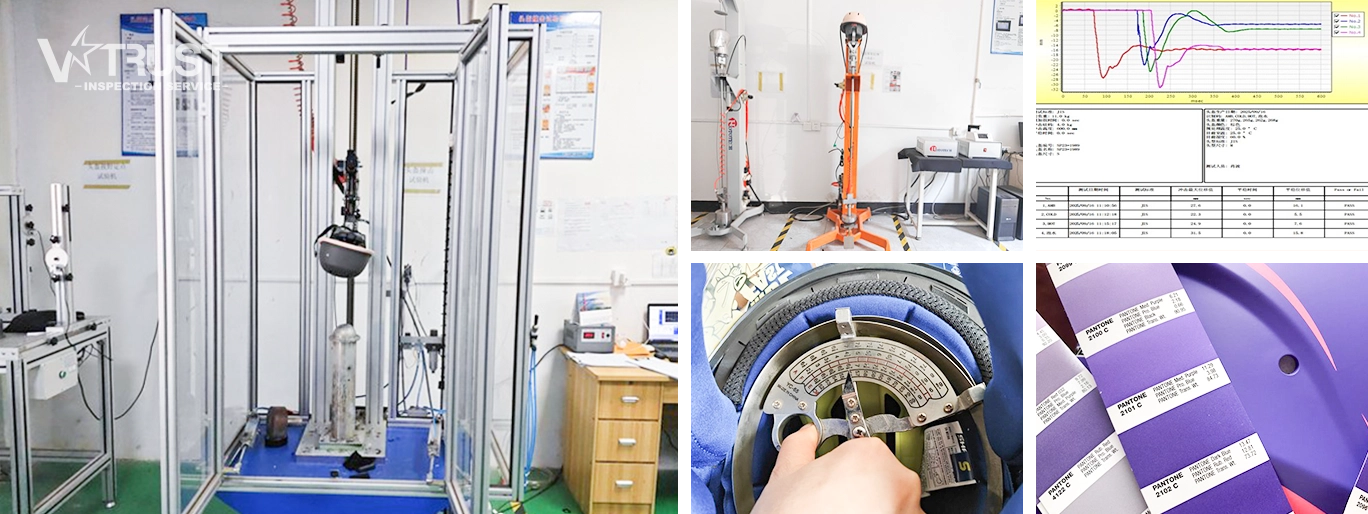
We arrange laboratory testing to confirm adherence to international safety and performance standards:
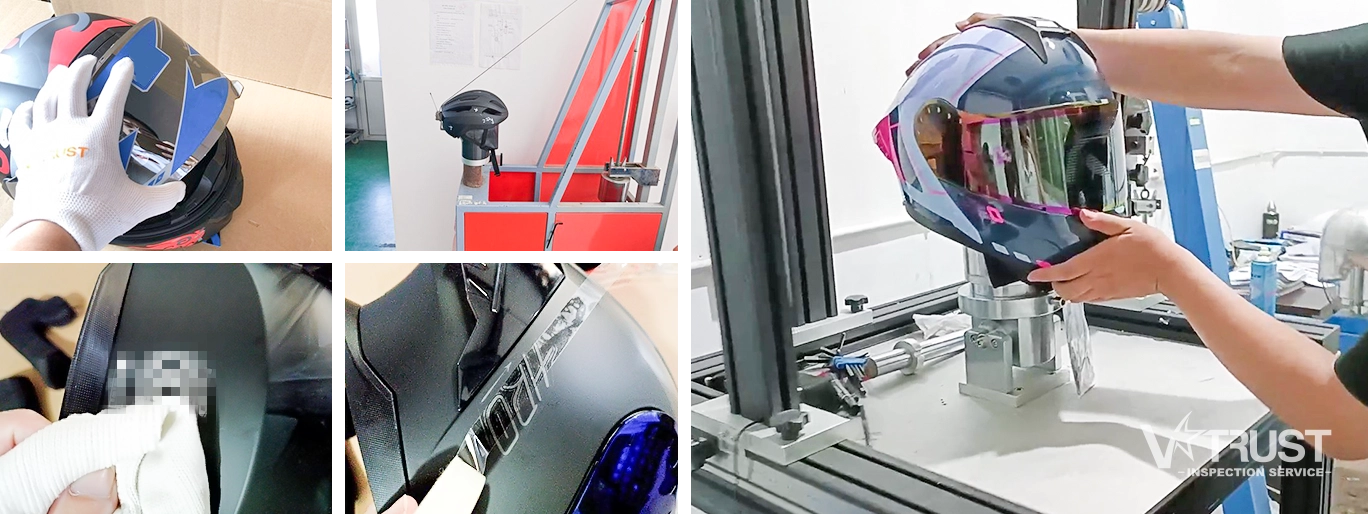
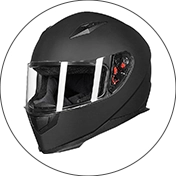
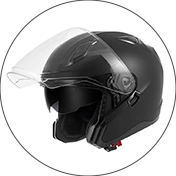
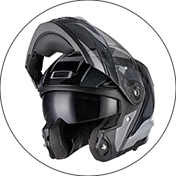
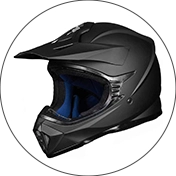
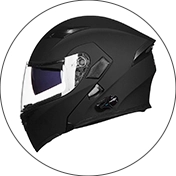
On-site inspections verify quality, function, and craftsmanship to meet your exact specifications.
Pre-audit manufacturing partners ensure capability and quality system reliability before production.
Test helmets against international safety, compliance, and performance standards in accredited labs.
Function Check
Pull Test for Straps
We conduct supplier audits to verify production capabilities and compliance before order placement.
Quick verification of supplier legitimacy through:
A comprehensive evaluation covering:
V-Trust offers comprehensive quality control solutions for Motorcycle Helmets, including Sample Checks, Production Monitoring, During Production Inspection, Pre-Shipment Inspection, and Container Loading Supervision. Our services are designed to ensure your products meet stringent safety standards and aesthetic expectations, providing you with peace of mind throughout the supply chain.
Our engineers meticulously evaluate motorcycle helmet samples for critical aspects such as shell integrity, visor clarity, retention system functionality, and internal padding comfort. This includes checking for proper fit, ventilation effectiveness, and preliminary impact absorption capabilities to ensure the design meets initial specifications.
During the manufacturing process, V-Trust provides on-site monitoring to track key production steps like shell molding, paint application, and liner assembly. This helps identify and address issues such as inconsistent material thickness, paint defects, or improper EPS liner placement early, preventing widespread quality problems.
When at least 10% of the motorcycle helmet order is completed, our inspectors conduct a detailed check. This mid-production inspection focuses on detecting issues like incorrect visor installation, chin strap attachment failures, or graphic misalignment, allowing for timely corrections and reducing rework costs.
Before shipment, a thorough final inspection is performed on Motorcycle Helmets. This includes verifying compliance with safety standards (e.g., ECE, DOT), checking for cosmetic flaws, ensuring proper functioning of all components (visor, vents, retention system), and confirming correct labeling, packaging, and quantity.
V-Trust supervises the container loading process for Motorcycle Helmets to ensure products are handled carefully, packed securely, and loaded efficiently. This prevents damage during transit, verifies carton markings, and confirms that the correct quantity and types of helmets are shipped according to the order.
CIMAMotor is a crucial platform for showcasing new motorcycle products, technologies, accessories, and parts, including motorcycle helmets, driving industry development trends.
https://en.cimamotor.com/
This fair covers the entire automotive supply chain, including an extensive "Accessories & Customising" section that features vehicle accessories and safety products highly relevant to Motorcycle Helmets.
https://automechanika-shanghai.hk.messefrankfurt.com/shanghai/en.html
Phase 1 specifically covers "Vehicles and Parts" and "Motorcycles," with motorcycle accessories like helmets and protective gear explicitly highlighted as part of the product range.
https://www.cantonfair.org.cn/en-US
Asia's leading product inspection company with full-time, professionally trained inspectors and comprehensive accreditation for inspection, audit, and lab testing services.
Why do I need product inspections for motorcycle helmets?
If you are worried about or have experienced problems such as poor quality, incorrect shipments, or wrong packaging for goods imported from Asia, product inspection services is your solution. V-Trust product inspection service can help you have accurate understanding about the quality of the goods without going to the factory by yourself.
Do I need to send you an approved sample for motorcycle helmets?
It would be great if you could send the approved sample to V-Trust before the inspection for reference. Compared with product photos or specification documents, a real product sample allows V-Trust engineers to do a more thorough comparison check.
How many days in advance should I book the inspection?
Though sometimes it's possible to book next-day inspections for many manufacturing clusters where V-Trust has a large team of full-time inspectors, we recommend booking with us at least three days in advance. Early booking is important for appropriate scheduling and good preparation before the inspection.
Who will I be in contact with throughout the whole process?
There will be one dedicated account manager who will be assigned as your main contact point at V-Trust. You will receive prompt responses whenever you have any questions regarding the inspection arrangement.
How long does it take to know the inspection result?
The official report, reviewed and signed by an authorized V-Trust technical manager, will be available within 24 hours after each inspection. Same day report is available if you would like to know about the inspection findings on the same day. V-Trust has the highest same day report rate in the inspection industry.
What if I have questions after I check my V-Trust report?
Please don’t hesitate to contact us whenever you have any questions. V-Trust team is always available even after the inspection is completed.
Ready to ensure the quality of your products? Contact our team to discuss your specific requirements.