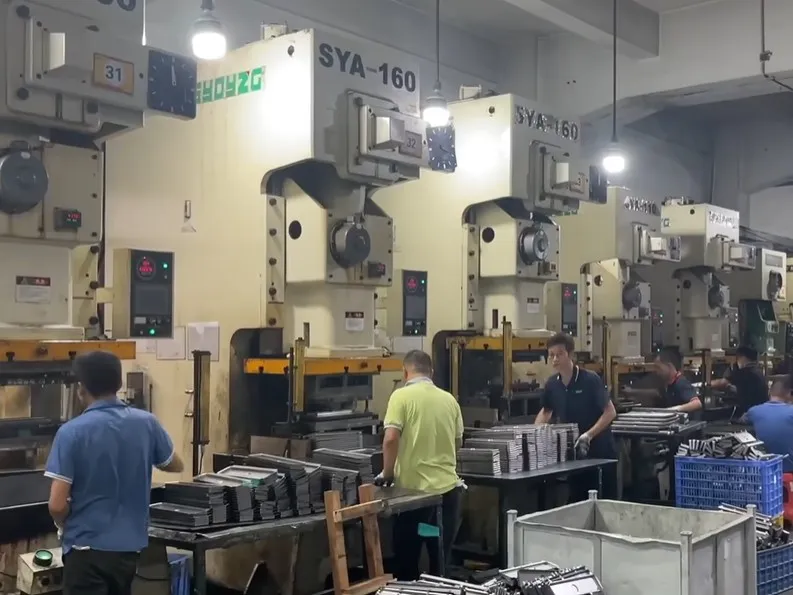
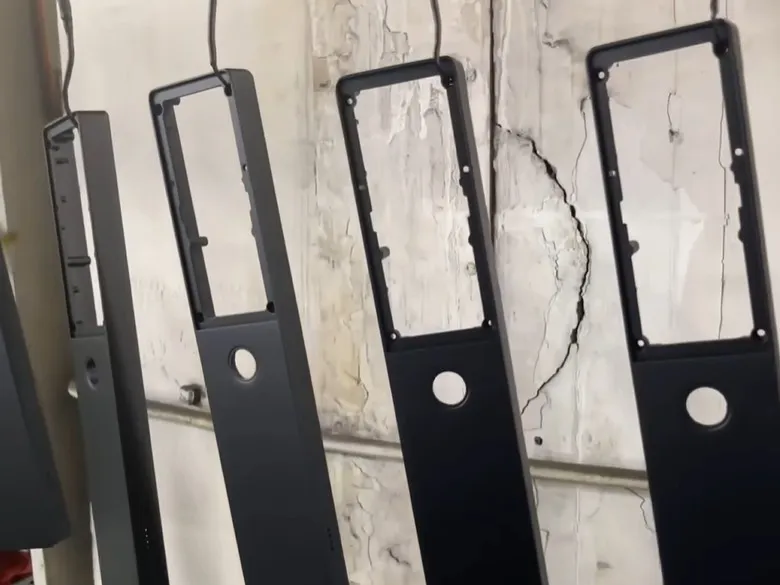
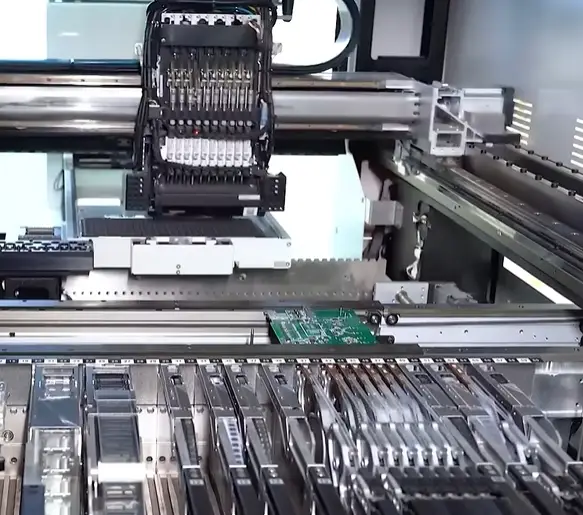
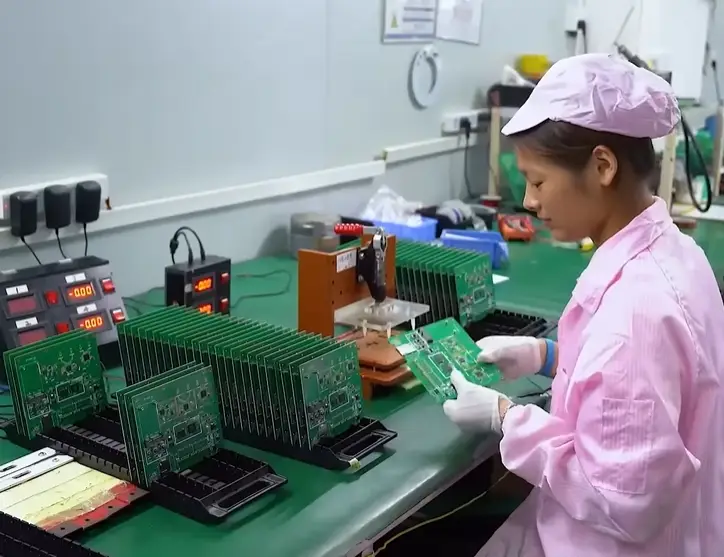
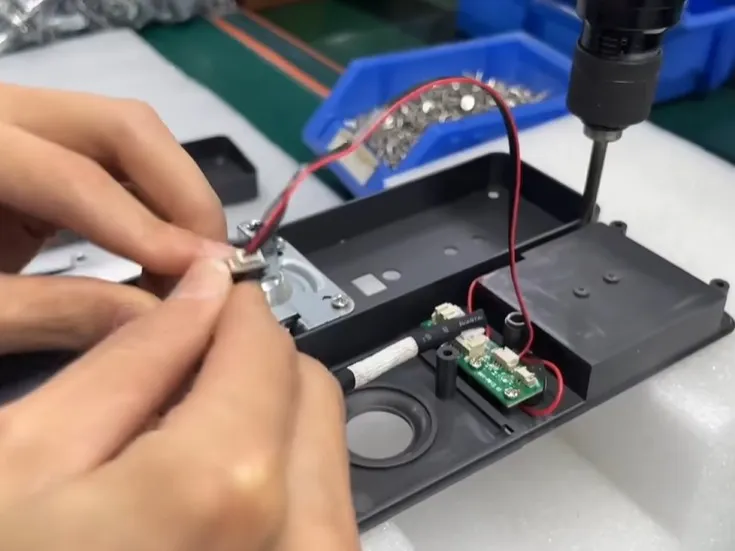
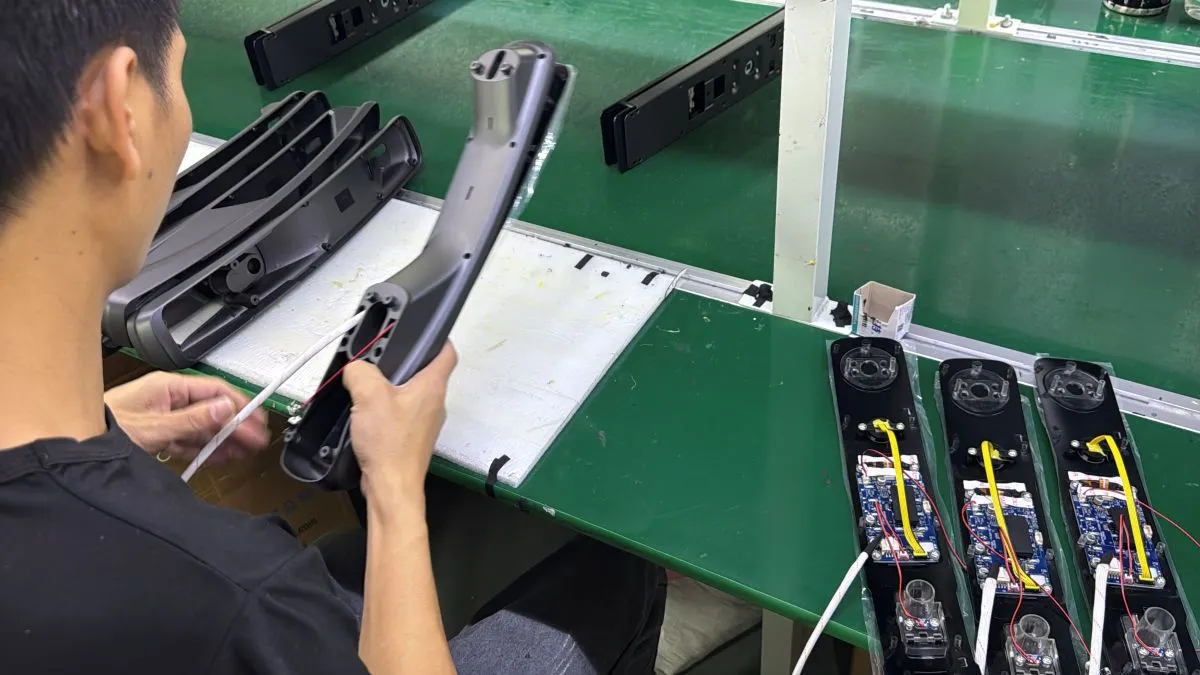
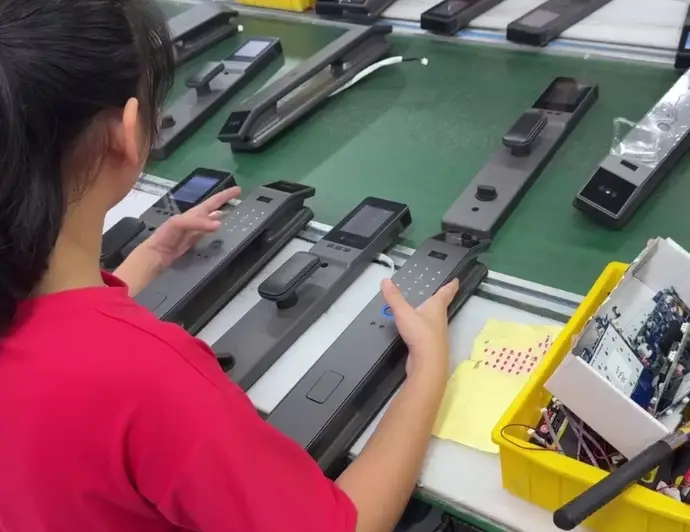
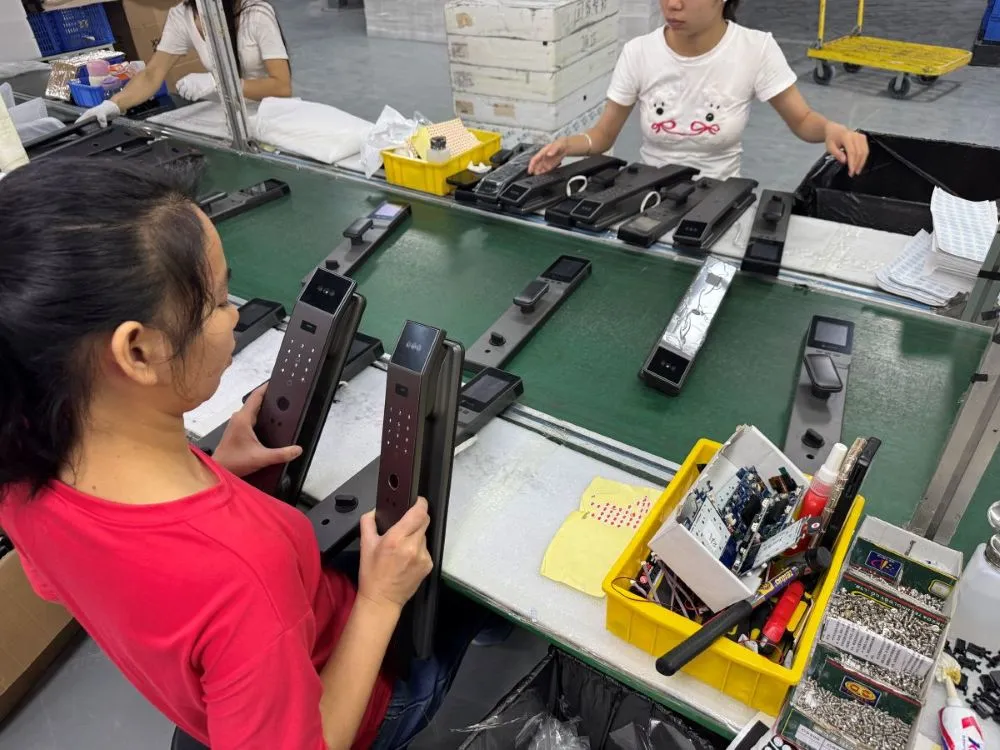
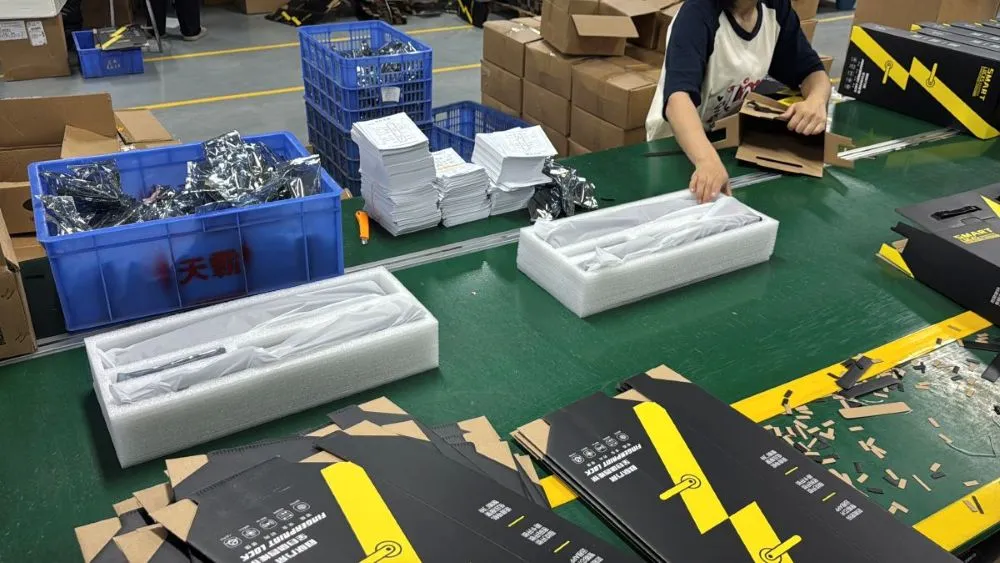
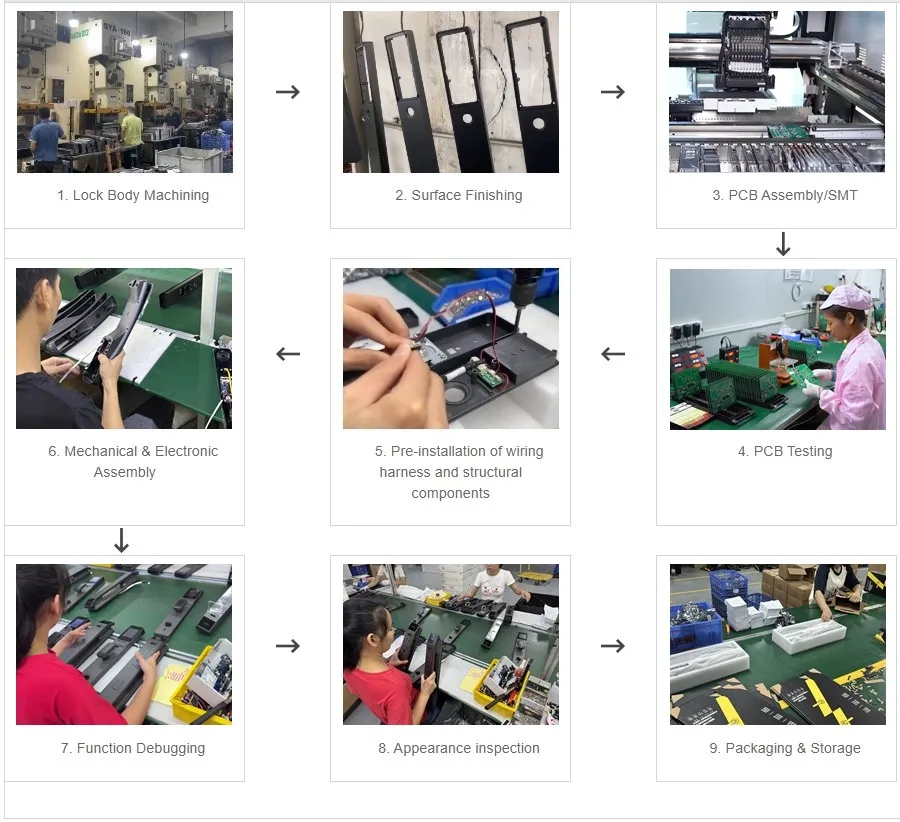
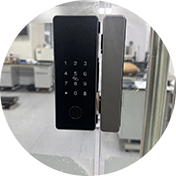
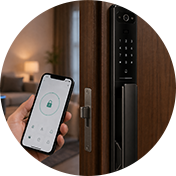
1. Production Process and Common Quality Issues for Smart Door Locks

Click to review the detailed production process and common quality issues for smart door locks.

2. On-Site Inspection Checkpoints for Smart Door Locks

Smart door locks combine mechanical locking components, electronic control systems, sensors, wireless connectivity, and user-interface functions. Our on-site inspections focus on the key risks that affect security, functionality, installation quality, and long-term reliability.

Structure & Installation Checks

  • Lock body structure and lock case type confirmation
  • Cylinder exposure and anti-tampering risk check
  • Handle return and spindle action check
  • Latch/deadbolt movement smoothness check
  • Front and rear panel fit, gap, and fastening inspection

Unlocking & Functional Verification

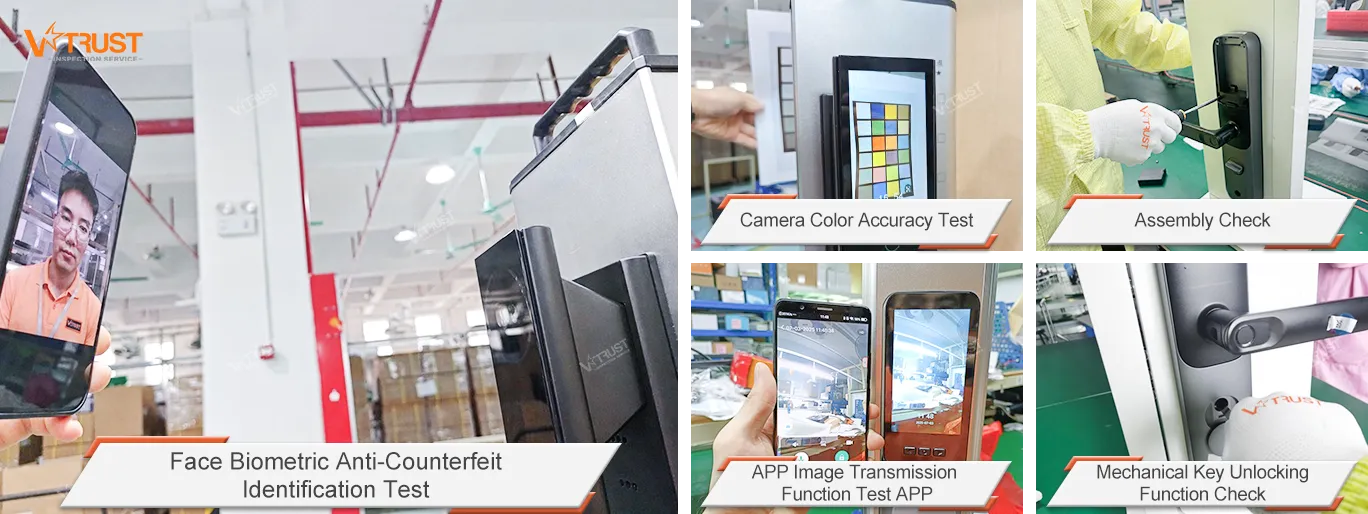
  • Fingerprint unlocking verification
  • PIN code input and keypad/touch response check
  • RFID / NFC / card unlocking verification
  • Mechanical key emergency unlocking check
  • App / Bluetooth / Wi-Fi unlocking verification

Safety Logic & Power Verification

  • Auto-lock function check
  • Fake-lock / door-not-fully-closed alert check
  • Indoor quick-release / anti-lockout logic check
  • Low-battery warning verification
  • Emergency power supply function check

Electronics & Connectivity Checks

  • Display, buzzer, status light, and voice prompt check
  • Sensor response and alarm trigger verification
  • Wireless pairing/binding/unbinding check
  • Firmware/version consistency confirmation

Appearance, Accessories & Marking

  • Housing scratches, coating, and cosmetic gap inspection
  • Accessories completeness check
  • Label, QR code, serial number, and marking verification

Smart Door Lock Inspection Services

3. Technical Verification & Lab Testing for Smart Door Locks

We verify smart door locks against applicable lock, safety, EMC, wireless, and cybersecurity requirements, depending on the lock structure, power system, connectivity functions, and destination market requirements.

Mechanical & Anti-Theft Verification

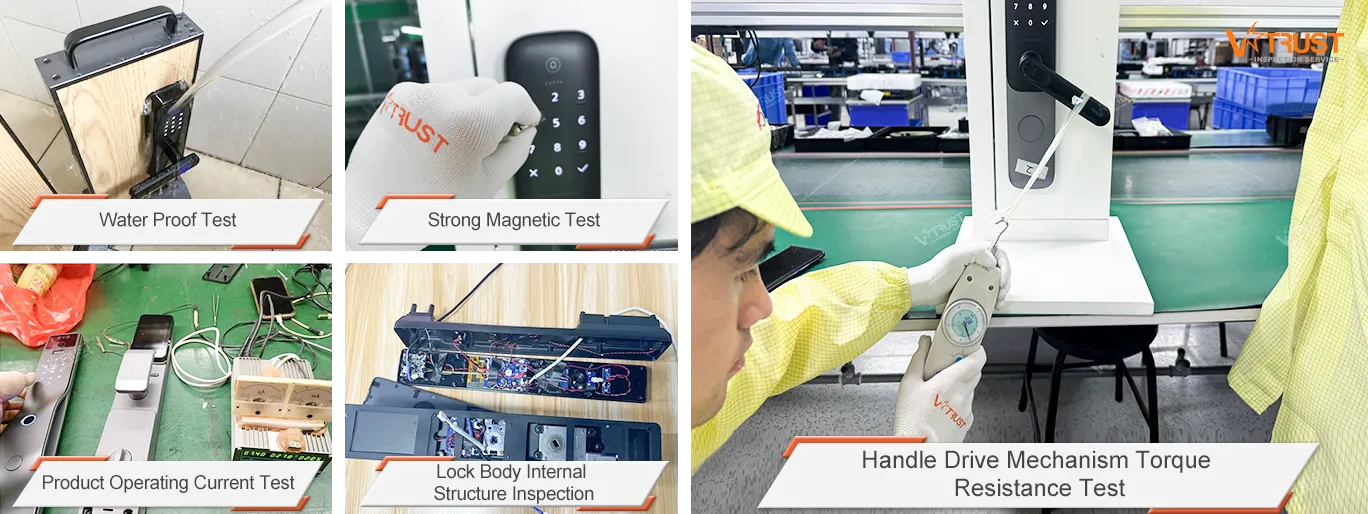
  • Assess lock body strength, electromechanical locking performance, and mechanical security-related risks.
  • Standards: ANSI/BHMA A156.25, EN 14846, EN 12209.

Function & Performance Verification

  • Verify unlocking consistency, locking logic, user operation, and electromechanical response under intended use.
  • Standards: ANSI/BHMA A156.25, EN 14846, EN 12209.

Durability & Environmental Reliability Testing

  • Check cycling life, corrosion resistance, ingress protection, and stability under temperature and humidity stress.
  • Standards: EN 1670, IEC 60529, IEC 60068 series.

Wireless & Cybersecurity Review

  • Assess baseline cybersecurity controls for connected smart locks, including password policy, software updates, access-control logic, and secure operation during updates.
  • Standards: ETSI EN 303 645, ETSI TS 103 815. For certain commercial access-control applications, UL 294 may also be relevant.

Electrical Safety, EMC & Radio Compliance

  • Evaluate EMC performance and wireless regulatory compliance for smart locks with Bluetooth, Wi-Fi, or other radio functions.
  • Standards: FCC Part 15, ETSI EN 300 328, ETSI EN 301 489-1, ETSI EN 301 489-17.

Battery Safety Verification

  • Confirm the safety of rechargeable lithium batteries and transportation compliance where applicable.
  • Standards: IEC 62133-2, UN38.3.A

Smart Door Lock On Site Inspection Services

4. Common Defects in Smart Door Lock Inspections

Mechanical & Installation Defects

  • Misaligned lock body or panel installation
  • Loose handles, levers, or fastening hardware
  • Latch/deadbolt sticking or incomplete movement
  • Incorrect screws, missing fasteners, or poor fitment

Functional & Connectivity Defects

  • Unresponsive keypad or touchscreen
  • Fingerprint recognition failure or high false rejection rate
  • Failed app connection or unstable Bluetooth/Wi-Fi pairing
  • NFC / RFID recognition failure

Security & Safety Risks

  • Vulnerabilities to hacking or unauthorized access
  • Inadequate resistance to forced entry
  • Overheating during operation or charging
  • Battery swelling, leakage, or abnormal odor

Reliability & Power Defects

  • Rapid battery drain or incorrect low-battery warning
  • Sudden system crash or reboot
  • Poor battery contact or unstable power supply
  • Firmware mismatch or inconsistent software behavior

Appearance & Packaging Defects

  • Scratches, dents, uneven coatings, or color differences
  • Poor assembly gaps or visible glue residue
  • Missing accessories or wrong labels
  • QR code, serial number, or instruction mismatch

5. Which Smart Door Lock Products Do We Have the Most Experience With?

Residential Smart Locks Inspection

Residential Smart Locks

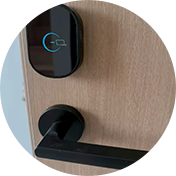
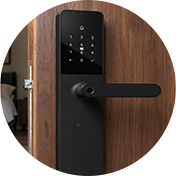
  • Keypad deadbolts
  • Fingerprint door locks
  • Wi-Fi / Bluetooth enabled locks
  • Smart lever handles
Face Recognition Smart Locks Inspection

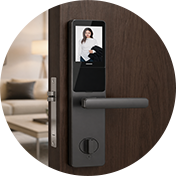
Video & Face-Recognition Smart Locks

  • Smart doorbell-lock combos
  • Video smart locks
  • Face recognition smart locks
  • Face recognition access-control locks
Connected Ecosystem Locks Quality Inspection

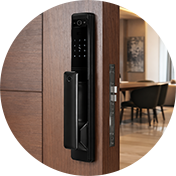
Connected & Ecosystem Locks

  • Remote / app-controlled smart locks
  • Cloud-connected management locks
  • Voice-assistant integrated locks
  • Rental / apartment management locks

6. Our Smart Door Lock Quality Control Services

Product Inspection

Verify smart lock workmanship, assembly quality, unlocking functions, accessories, packaging, and labeling on-site.

Learn More

Supplier Audits

Evaluate the manufacturer’s capability in lock body machining, electronic assembly, firmware control, test-fixture setup, and quality systems.

Learn More

Laboratory Testing

Verify safety, durability, EMC, environmental reliability, battery-related risks, and connected-function requirements through accredited testing.

Learn More

Customized QC Checklists/Sample Check

Adapt inspection points to your lock structure, unlocking methods, target market, and approved sample requirements.

Learn More

Impact Resistance Test

Impact to the exposed external part of the smart lock, such as the front panel, corners, and other vulnerable exterior areas.

Tesla Jammer Check

Using the jammer to jam/scan all locations on the door lock, the door lock could not open without using fingerprint or other functions.

7. How V-Trust Helps You Find the Right Smart Door Lock Supplier

We dispatch experienced auditors to assess supplier capabilities before you place deposits, mitigating potential risks.

Factory Audit

Quick verification of supplier legitimacy through:

  • Business license and certification checks
  • Basic production capacity review
  • Contact-person and factory-location verification

In-Depth Factory Audit

A comprehensive evaluation covering:

  • Lock body machining capability and finishing-process control
  • SMT/PCB assembly capability and firmware management
  • Functional aging setup and test-fixture control
  • Quality control system and traceability of key modules/software versions

8. How V-Trust Controls Smart Door Lock Quality

V-Trust delivers comprehensive smart lock inspection services, ensuring consistent product quality and regulatory compliance. Our quality control solutions cover all stages of smart lock, including Sample Checks, Production Monitoring, During Production Inspection, Pre-Shipment Inspection, and Container Loading Supervision, reducing the risk of product failures and costly recalls.

Sample Check

Before mass production, our engineers verify the approved smart lock sample for structure, fitment, unlocking logic, appearance, and key electronic functions.

Production Monitoring

During production, we track key processes such as PCB assembly, firmware programming, wiring installation, handle/lock body assembly, and finishing consistency.

During Production Inspection

When at least 10% of the order is completed, we check for early-stage issues such as assembly errors, cosmetic inconsistency, unstable unlocking performance, or firmware/version discrepancies.

Pre-Shipment Inspection

Before shipment, we verify product quality, key unlocking functions, low-battery indication, accessories, packaging, labeling, and consistency against specifications.

Container Loading Supervision

We confirm correct quantities, packaging integrity, carton condition, and proper loading protection to reduce transit damage risk.

9. The Most Related Sourcing Fairs in Asia

12 - 14 January 2026

Intersec

Dubai World Trade Centre, UAE

It showcases cutting-edge technologies including access control, video surveillance, cybersecurity, fire fighting & rescue equipment, personal protective gear and homeland security solutions.

22 - 24 April 2026

Secutech

Taipei Nangang Exhibition Center, Hall 1, Taipei, Taiwan

Focused on security, fire & safety, and smart home solutions, including smart locks, access control, video surveillance, and IoT security technologies.

July 8-11, 2026

China International Building & Decoration Fair (CBD Fair Guangzhou)

Canton Fair Complex, Guangzhou, China

Covering the entire industrial chain of building decoration, including smart home systems, smart locks, doors, windows, and hardware.

Why Choose V-Trust for Smart Door Locks Quality Control?

20
Years of Experience
650+
Trained Inspectors
10
Asian Countries
13,000
Satisfied Clients

Asia's leading product inspection company with full-time, professionally trained inspectors and comprehensive accreditation for inspection, audit, and lab testing services. 

Smart Door Locks Quality Control: Frequently Asked Questions (FAQ)

Why inspect smart door locks before shipment?

Smart door locks combine mechanical locking parts, electronic control systems, sensors, wireless connectivity, and software logic. Quality issues such as unstable unlocking, incorrect assembly, battery-related failures, poor fitment, or weak anti-tampering performance can lead to security risks, customer complaints, and costly returns. Pre-shipment inspection helps identify these issues before the goods leave the factory.

Do you check both mechanical security and electronic functions?

Yes. We check both mechanical and electronic aspects of smart door locks, including lock body structure, latch/deadbolt action, handle return, fingerprint/PIN/card/app unlocking, low-battery warning, and overall functional consistency.

Can you verify Bluetooth, Wi-Fi, or app-related functions during inspection?

Yes. For connected smart locks, we can verify key wireless and app-related functions such as pairing, binding/unbinding, app unlocking, and basic communication stability, depending on the product design and inspection scope.

Do I need to send you an approved sample for smart locks?

It is highly recommended. An approved sample helps our engineers compare the actual production goods against the correct structure, finish, functions, accessories, and packaging requirements more accurately than photos or specification sheets alone.

How many days in advance should I book the inspection?

We recommend booking at least three days in advance. In some manufacturing areas where V-Trust has larger local teams, next-day inspections may also be possible, depending on the schedule.

How long does it take to get my report?

The official inspection report is typically reviewed and signed by an authorized technical manager and made available within 24 hours after the inspection. A same-day draft report may also be available if needed.

What if I have questions after receiving the report?

Our service does not end when the report is issued. If you have questions about inspection findings, defect classification, photos, videos, or follow-up actions, our team can help clarify the report contents.

Can laboratory testing standards be selected based on my market?

Yes. Applicable standards may vary depending on the lock type, power supply, connectivity functions, and destination market. We can help align the testing scope with relevant lock, battery, EMC, wireless, or cybersecurity requirements where applicable.

Request Your Inspection Today

Ready to ensure the quality of your products? Contact our team to discuss your specific requirements.