
1. Production Process and Common Quality Issues for USB Charging Cables

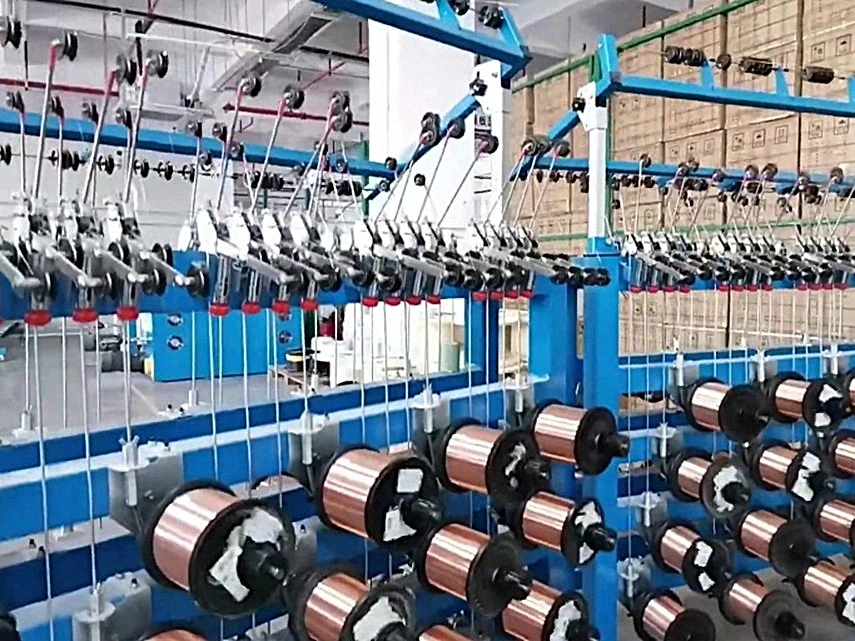
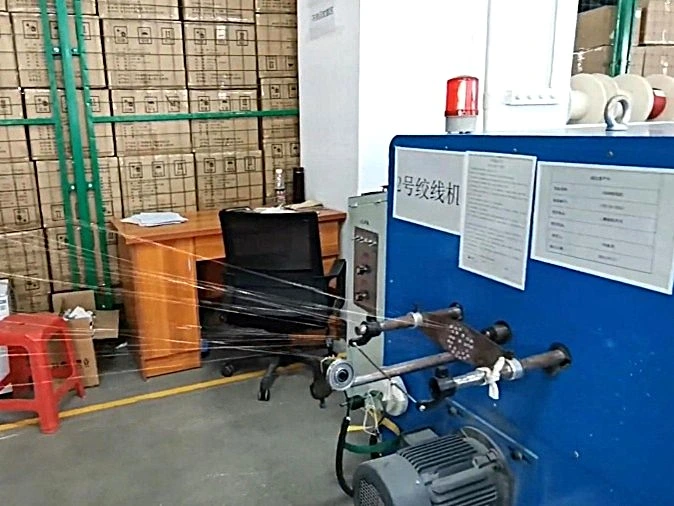

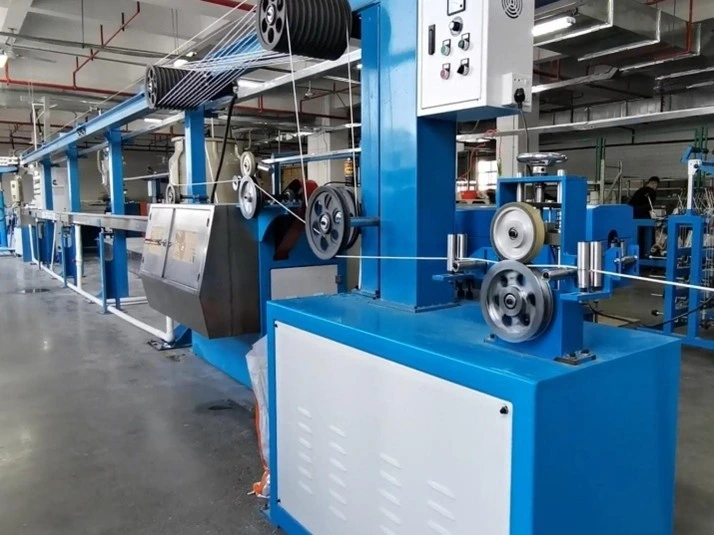
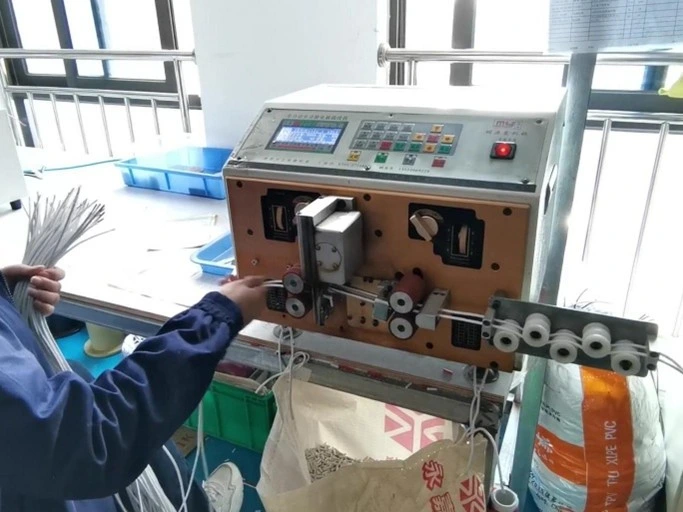
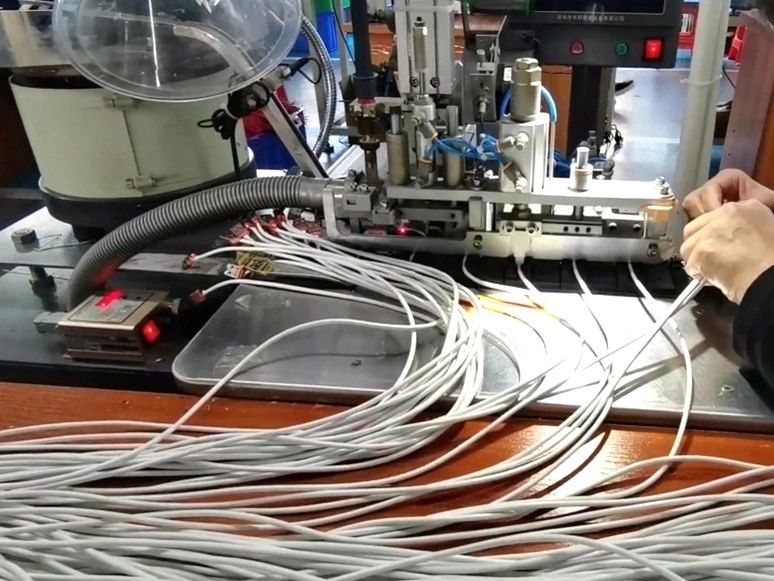
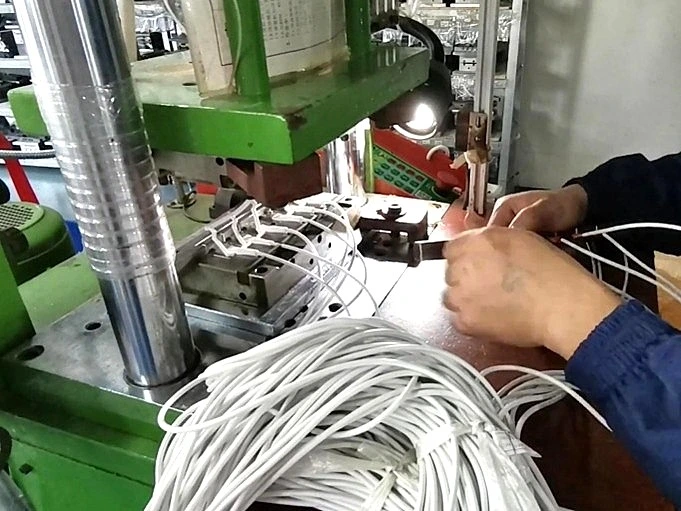
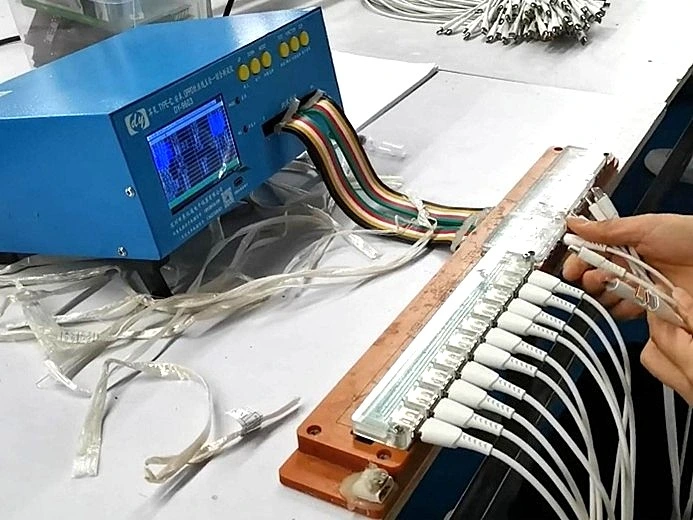

Click to review the detailed production process and common quality issues for USB charging cables.
2. On-Site Inspection Focus for USB Charging Cables
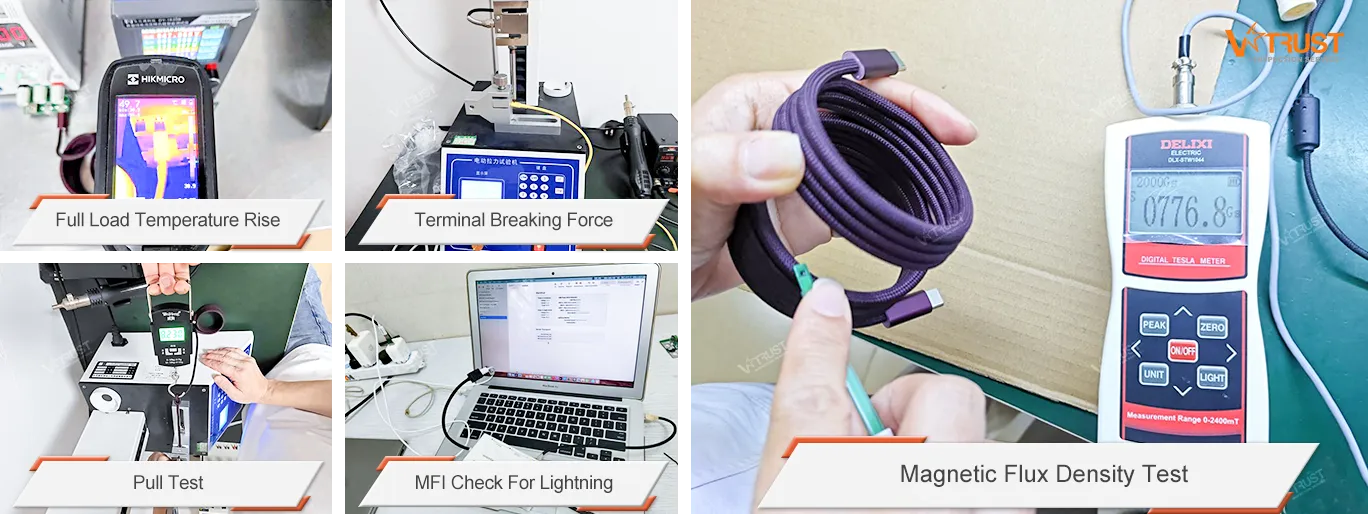
Our on-site checks focus on intermittent connections, incorrect wiring, excessive voltage drop, weak terminations, and unsupported charging or data claims, using the approved specification and agreed test setup.
Appearance, Dimensions & Connector Fit
- Check connector type, shell, contacts, jacket, molding, strain relief, cable length, and specified dimensions against approved references.
- Check plug fit and connection stability with suitable reference sockets; check reversible-plug orientations where applicable.
Electrical Integrity & Charging
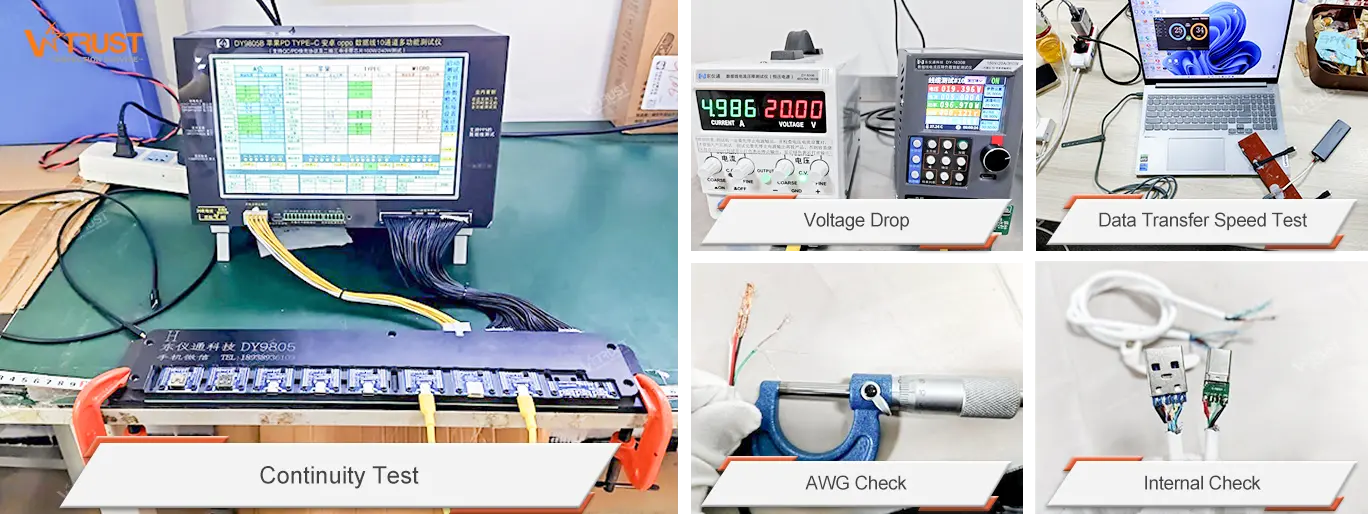
- Use appropriate fixtures to check the specified pin map, continuity, shorts, and relevant CC connections. Compare resistance or voltage drop at the agreed load.
- Check agreed charging profiles with compatible sources and loads; read E-marker data where required and record obvious abnormal heating or disconnection.
Data Transfer & Device Compatibility
- For data-capable models, check detection, file transfer, and stability with known compatible hosts and devices in the agreed orientations.
- Check advertised video or other supported functions only with the required setup. A successful file copy does not prove the advertised maximum signaling rate.
Assembly Strength & Shipment Consistency
- Perform agreed pull, flex, or mating spot checks with defined samples, force, angle, and cycles, then recheck electrical function.
- Verify model, length, power and data markings, accessories, packaging, and available claim-supporting documents. Full durability or certification evaluation is a separate scope.
3. Lab Testing & Compliance Support for USB Charging Cables
Select the test program by connector type, electrical rating, data capability, construction, and target market. Routine inspection checks production consistency; it does not grant USB-IF, MFi, or regulatory approval.
USB Interface, Power & Signal Performance
- Use applicable USB-IF specifications and test plans. IEC 62680-1-3 covers USB Type-C cable/connector requirements; IEC 62680-1-2 covers USB Power Delivery. Match the edition and test plan to the stated claim or program.
- Assess relevant resistance, current capability, electronic marking, and signal integrity. USB 2.0, USB 3.2, and USB4 capabilities need their corresponding methods and equipment.
Construction Safety & Reliability
- Consider UL 9990 for in-scope ICT power cable assemblies. Assess applicable temperature rise, insulation, termination, mechanical, and material requirements against the selected program.
- Plan full mating life, flexing, torsion, pull, abrasion, and environmental tests as applicable. Agree method-specific limits; UL 9990 does not establish data-transmission performance.
Materials, Market Access & Claims
- Assess applicable RoHS restrictions, REACH obligations, and California Proposition 65 exposure/warning requirements. Match reports to the actual jacket, connectors, solder, and other relevant materials.
- Review CE/documentation and consumer-safety obligations by market and supply arrangement. Assess EMC/FCC applicability for the actual active or passive design; verify USB-IF/MFi claims through the relevant program evidence.
Reference sources: USB-IF cables and connectors; IEC 62680-1-3:2026; IEC 62680-1-2:2026; UL 9990; Apple MFi scope. A current IEC publication is not automatically the edition referenced by a regulation or certification program.
4. Typical USB Cable Problems We Help Buyers Catch Before Shipment
Electrical & Charging Problems
- Open circuits, shorts, wrong pin connections, or intermittent charging
- Excessive voltage drop, weak joints, or abnormal connector heating
- Incorrect CC or E-marker information for the declared cable type
Construction & Durability Problems
- Damaged contacts, poor plug fit, or loose connector shells
- Weak strain relief, cracked molding, or exposed conductors
- Unapproved conductor material, size, or cable-length substitution
Data, Claims & Shipment Problems
- Data transfer or advertised video functions do not work
- Power, speed, compatibility, or certification claims lack support
- Wrong connector combination, model, length, or packaging label
5. Which USB Cable Products Can V-Trust Inspect?
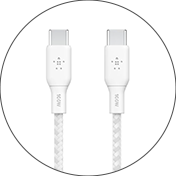
USB-C to USB-C Cables
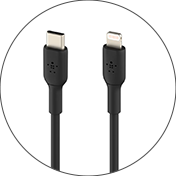
Lightning Cables
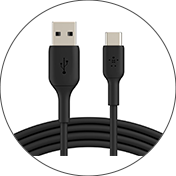
USB-A to USB-C Cables
6. Our USB Charging Cable Quality Control Services
Product Inspection
Check appearance, dimensions, wiring, agreed charging/data functions, limited mechanical checks, markings, and shipment consistency on-site.
Supplier Audits
Evaluate wire and connector sourcing, termination and molding controls, electronic-component traceability, test fixtures, calibration and quality records.
Laboratory Testing
Coordinate an agreed program for applicable cable safety, materials, electrical performance, reliability, and interface requirements. Confirm capability and certification scope in advance.
Customized QC Checklists/Sample Check
Adapt checks to the connector pair, length, power rating, data capability, approved construction, target devices, and buyer requirements.
7. How V-Trust Helps You Find the Right USB Cable Supplier
We dispatch experienced auditors to assess supplier capabilities before you place deposits, helping mitigate sourcing and production risks.
Factory Audit
Verify the supplier's identity and basic production capability through:
- Business registration and factory-location checks
- Key equipment, production capacity, and outsourcing review
- Basic inspection procedures and available compliance records
In-Depth Factory Audit
A comprehensive evaluation covering:
- Conductor, connector, compound, and electronic-component traceability
- Wire preparation, termination, molding, and strain-relief controls
- Pin-map, resistance, charging, data, and E-marker test capability
- Calibration, reliability validation, change control, and test records
8. How V-Trust Controls USB Charging Cable Quality
Sample Check
Before mass production, compare connector types, cable length, construction, agreed charging/data functions, markings, and packaging against the approved specification. Confirm the evidence required for power, speed, and certification claims.
Production Monitoring
Focus on conductor and connector identity, stripping damage, termination quality, shielding, electronic components, molding, and strain relief. Review the factory's electrical test coverage and traceability before defects become hidden inside the overmold.
During Production Inspection
When about 10–20% of the order is completed, sampled checks verify workmanship, length, connector fit, wiring, agreed charging and data functions, and production-test records while corrective action is still possible.
Pre-Shipment Inspection
Verify quantity, model, connector combination, dimensions, workmanship, agreed electrical/functions and mechanical spot checks, labels, accessories and packaging against the order and approved sample.
Container Loading Supervision
Confirm shipment identity, carton quantities and condition, mixed-SKU control and loading protection against the approved packing and loading instructions.
9. Related USB Cable & Electronics Sourcing Fairs in Asia
Hong Kong Electronics Fair (Spring Edition)
Hong Kong Convention and Exhibition CentreConsumer electronics, accessories, and related technologies relevant to USB cable and charging-product sourcing.
Official exhibition information
electronica Shanghai
Shanghai, ChinaElectronic components, connectors and interconnection technologies relevant to cable assemblies and component sourcing.
https://www.electronicachina.com.cn/en/important-exhibitions-for-the-industry
COMPUTEX Taipei
Taipei, TaiwanComputing systems, peripherals and connectivity products relevant to USB interoperability and accessory sourcing.
https://www.computextaipei.com.tw/en/index.html
Why Choose V-Trust for USB Charging Cable Quality Control?
Independent inspection, supplier audit, and laboratory testing support through V-Trust's inspection network and agreed service scope.
USB Charging Cable Quality Control: Frequently Asked Questions (FAQ)
Does a USB-C plug guarantee fast charging, high-speed data, or video?
No. Connector shape does not establish the cable's power rating, data rate, or video support. Match the exact cable model to its approved construction, supported functions, and evidence. High-power USB-C cables can still have USB 2.0 data capability.
How do you check high-power and E-marker claims?
Use compatible, appropriately rated sources, loads and analyzers to check the agreed profiles and electronic identity where required. Standard 5 A USB-C to USB-C cables require suitable electronic marking; EPR claims also require the appropriate EPR-rated construction and identification. An E-marker readout alone does not prove current capability, safety, or USB-IF certification. Delivered power also depends on the source, device, and negotiated profile.
Which standards are relevant to USB charging and data cables?
Relevant references include the applicable USB-IF cable/connector and Power Delivery specifications and test plans, IEC 62680-1-3 for USB Type-C, IEC 62680-1-2 for USB PD, and UL 9990 for covered ICT power cable assemblies. Select additional data, material and mechanical tests by the declared cable type. Confirm the required edition rather than treating one standard as universal legal approval.
Does every USB cable need LVD, EMC or FCC testing?
No single route applies to every design. Typical USB cables rated below 75 V DC are below the LVD voltage range; this does not remove other applicable obligations. In-scope cables sold separately can require CE marking and an EU declaration under RoHS. Passive cables should not automatically be assigned the same EMC/FCC program as active electronic products. Assess the actual design, market, and supply arrangement. LVD scope · RoHS cable guidance.
Are USB-IF or MFi marks proof of approval for every cable?
These are separate industry programs. Review model-specific evidence and permitted logo use where a claim is made. Lightning accessories can involve MFi licensed technology; ordinary USB-C charging accessories without licensed Apple technology are outside that program. Charging an Apple device successfully does not establish MFi certification. USB-IF product search · Apple MFi scope.
Does the EU common-charger rule require every cable to be USB-C?
No. The common-charger provisions target specified categories of rechargeable radio equipment and their charging requirements. They are not a blanket prohibition on every separately sold legacy or specialty cable. Assess bundled cable compatibility and the applicable product obligations case by case. EU common-charger guidance.
Can inspection confirm chemical compliance or a full lifetime claim?
Inspection can compare materials and documents and perform agreed spot checks. RoHS restrictions, REACH restrictions and communication duties, and Proposition 65 exposure warnings are different obligations. Chemical verification and full durability claims require appropriate evidence or tests. For EU consumer sales, applicable GPSR safety and traceability requirements also need review.
What should buyers provide, and when should they book?
Provide connector types, length, construction/BOM, current and voltage ratings, charging protocols, data/video claims, approved samples, compatible devices, test limits and cycles, labels, packaging, and claimed certification records. Book at least three days ahead and confirm access to the required equipment. The official inspection report is normally released within 24 hours after inspection; laboratory testing follows a separately agreed schedule.
Request Your Inspection Today
Ready to improve USB cable quality? Contact our team to discuss your cable types, target market, and inspection requirements.